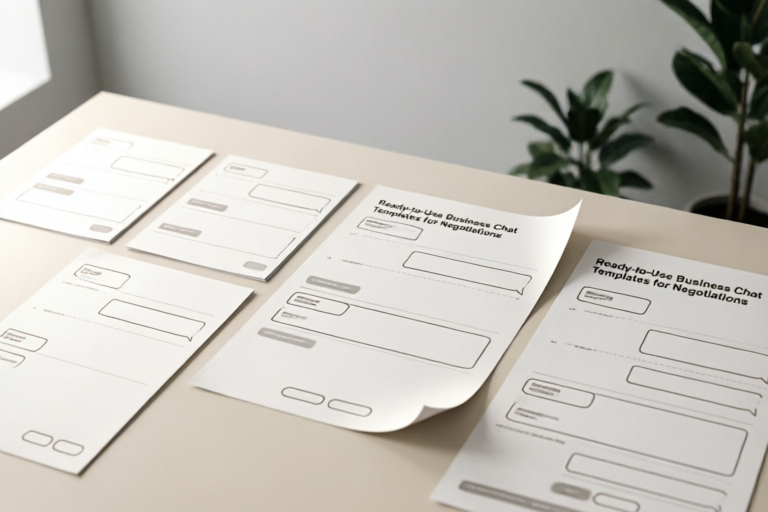
Ready-to-Use Business Chat Templates for Negotiations
Master Your Negotiations with Tailored Chat Templates
Introduction to Business Chat Templates
Effective Communication in Business Negotiations: In today's fast-paced business environment, clear and concise communication is crucial for success. Whether you're negotiating a partnership, securing a client, or closing a deal, the right words at the right time can make all the difference.
The Role of Chat Templates: Chat templates are pre-written messages designed to streamline and enhance your negotiation process. They provide a structured approach to communication, ensuring that you cover all necessary points while maintaining a professional tone. These templates save time, reduce errors, and help you stay focused on the core objectives of the negotiation.
What This Article Covers: In this comprehensive guide, we'll explore various ready-to-use business chat templates tailored for different stages of the negotiation process. From initial contact to finalizing agreements, these templates will equip you with the tools needed to navigate complex discussions confidently.
Essential Templates for Initial Contact
Sample Messages for Initiating Contact
When reaching out to potential partners or clients, it's essential to make a strong first impression. Here are some sample messages to get you started:
- Greeting and Introduction: "Hi [Name], I hope this message finds you well. My name is [Your Name] from [Your Company], and I’m reaching out because I believe our companies could benefit from a strategic partnership."
- Value Proposition: "We have been impressed by [Company’s Achievements] and would love the opportunity to explore potential synergies."
Tips for Personalization and Professionalism
While using templates can save time, personalization is key to building rapport. Replace generic placeholders like [Name] and [Your Company] with actual names and details. Mention specific achievements or interests that demonstrate genuine interest in the other party.
Best Practices for Timing and Follow-Up
Timing is critical when initiating contact. Aim to reach out during business hours and avoid sending messages late at night or over weekends. If you don’t receive a response within a reasonable timeframe, consider following up with a polite reminder. Be patient but persistent; sometimes, it takes multiple attempts to secure a response.
Templates for Proposals and Offers
Structured Examples for Presenting Proposals and Offers
When presenting proposals or offers, clarity and persuasiveness are paramount. Here are some structured examples:
- Clear Objective: "Our proposal aims to [Objective], providing mutual benefits for both parties."
- Benefits Overview: "By partnering with us, you will gain access to [Specific Benefits]."
Balancing Clarity and Persuasiveness
Be straightforward about the benefits of your proposal without sounding overly salesy. Use data and facts to support your claims, and highlight how the partnership will be mutually beneficial. Avoid making exaggerated promises; instead, focus on realistic outcomes.
Strategies for Handling Objections and Counteroffers
Not everyone will agree with your proposal right away. Anticipate potential objections and prepare responses. For example:
- If they express concerns about cost: "We understand that budget constraints are important. Let's discuss flexible payment options or phased implementations that align with your financial goals."
- If they present a counteroffer: "Thank you for considering our proposal. We appreciate your willingness to negotiate. Let's review the terms and find a solution that works for both sides."
Templates for Closing Deals
Effective Ways to Wrap Up Successful Negotiations
Closing a deal requires a delicate balance of enthusiasm and professionalism. Here are some effective ways to wrap up:
- Emphasize Mutual Benefits: "This agreement not only benefits [Your Company] but also provides significant value to [Client’s Company]."
- Build Long-Term Relationships: "We look forward to a long and prosperous partnership built on trust and mutual respect."
Techniques for Emphasizing Mutual Benefits
Reiterate the shared goals and how both parties stand to gain from the agreement. Highlight any additional perks or incentives that may not have been previously mentioned. This reinforces the idea that the deal is win-win.
Guidance on Drafting Final Agreements and Next Steps
Once the deal is closed, draft a final agreement that outlines all the terms and conditions. Ensure both parties sign off on it. Follow up with a confirmation email detailing next steps, timelines, and key milestones. This helps maintain momentum and ensures a smooth transition.
Templates for Handling Difficult Situations
Scripts for Addressing Misunderstandings, Conflicts, and Other Challenges
Negotiations aren't always smooth sailing. Here are some scripts to address common challenges:
- Misunderstandings: "I understand that there may have been some confusion regarding [Issue]. Let's clarify this point to ensure we're on the same page."
- Conflicts: "I appreciate your perspective, and I want to ensure we find a solution that works for both parties. Can we discuss potential compromises?"
Methods for De-Escalating Tensions and Finding Common Ground
Stay calm and composed during heated discussions. Acknowledge the other party's concerns and work towards finding common ground. Use phrases like "I understand your position" and "Let's explore solutions together."
Advice on Maintaining Professional Demeanor During Tough Conversations
Even in challenging situations, it's vital to maintain professionalism. Avoid raising your voice or making accusations. Focus on problem-solving and finding mutually acceptable solutions.
Conclusion and Final Thoughts
In this article, we've explored various ready-to-use business chat templates designed to streamline and enhance your negotiation process. From initial contact to finalizing agreements, these templates provide a solid foundation for effective communication.
Adapt and Refine: While these templates are a great starting point, it's essential to adapt them to suit your specific needs. Customize the language and structure to align with your company's voice and style.
Call to Action: Share your own negotiation strategies and tips in the comments below. We'd love to hear how you approach business negotiations and what works best for you.
Comments

Using these for job applications. Helps keep my messages professional and concise.

These templates are perfect for outreach on LinkedIn. I got some great responses already!

Really helpful. I added my company's tagline to make it feel more personalized.

Great resource! Could you add some examples for remote negotiations via video calls?

Love the closing deal section. Added some personal touches and nailed it!

How do I tweak these templates for a more informal tone? My clients prefer a friendlier approach.
Used this and it worked! Perfect for initial contact. Saved me a lot of time.