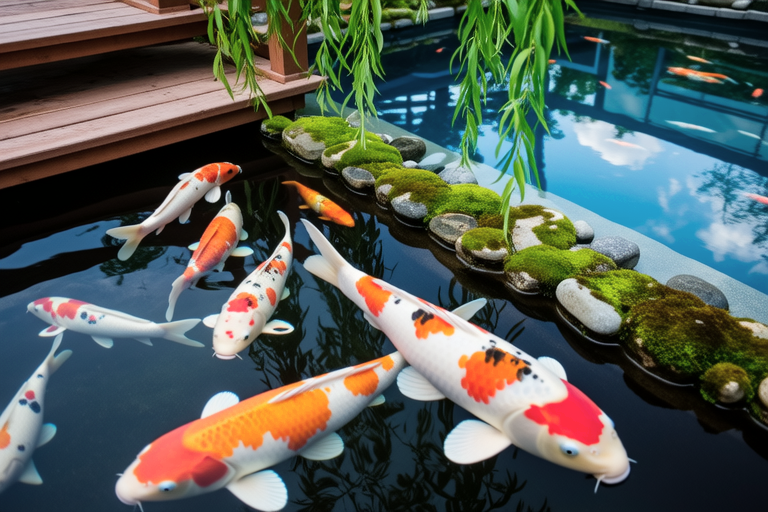
From Pond to Pool Party: The Ultimate Guide to Koi Care
Welcome to the fascinating world of koi keeping! Whether you’re a seasoned enthusiast or a novice looking to create your very own aquatic paradise, this guide will provide you with everything you need to know about koi care. From setting up the perfect pond to maintaining water quality and addressing health concerns, we’ll cover all the essentials to ensure your koi thrive in their new home.
Setting Up an Ideal Pond Environment
The first step in koi care is creating a suitable pond environment. Your koi’s habitat should be spacious, well-planned, and equipped with necessary features like filtration systems, aeration devices, and adequate shade. A good rule of thumb is to have at least 20 gallons of water per inch of fish. Ensure the pond has a gentle slope and includes hiding spots for your koi to retreat when they feel threatened.
When designing your pond, consider incorporating various plants that not only add aesthetic value but also contribute to the overall health of your aquatic ecosystem. Floating plants like water lettuce and water hyacinth help reduce algae growth by blocking sunlight. Submerged plants such as hornwort and anacharis oxygenate the water while providing shelter for your koi.
Water Quality Maintenance
Water quality is crucial for the well-being of your koi. Regularly test the pH levels, ammonia, nitrite, and nitrate concentrations in your pond. Ideal pH ranges between 7.2 and 8.5, while ammonia and nitrite should be undetectable. Nitrate levels should remain below 40 ppm. To maintain these parameters, perform partial water changes every two weeks and use beneficial bacteria supplements to aid in breaking down harmful waste products.
In addition to chemical balance, physical cleanliness is equally important. Skim debris from the surface daily and vacuum the bottom of the pond weekly. This prevents the accumulation of organic matter that can lead to poor water quality and disease outbreaks.
Suitable Feeding Practices
Feeding your koi properly ensures they grow healthy and strong. High-quality koi pellets or flakes formulated specifically for their nutritional needs should make up the majority of their diet. Feed your koi small amounts multiple times a day during warmer months when they are most active. Reduce feedings during colder periods as their metabolism slows down.
Varying their diet with occasional treats such as freeze-dried bloodworms, krill, or vegetables like zucchini adds variety and enrichment to their meals. Always avoid overfeeding, which can pollute the water and cause digestive problems for your koi.
Common Health Issues and Preventive Measures
Like any pet, koi are susceptible to various health issues. One common problem is fin rot, characterized by frayed or disintegrating fins caused by poor water quality or bacterial infections. Another issue is ich, a parasitic infection that manifests as tiny white spots on the body of the fish. Both conditions require prompt treatment with appropriate medications available at local pet stores.
To prevent these ailments, maintain optimal water conditions and quarantine new additions to your pond before introducing them to the main population. Regular observation allows you to catch potential problems early, increasing the chances of successful treatment.
Seasonal Care Tips
Koi care varies depending on the season. During spring, conduct a thorough cleaning of your pond, including scrubbing the liner and replacing any damaged filters. Gradually increase feeding amounts as temperatures rise and the koi become more active.
In summer, pay close attention to water temperature and oxygen levels. Warmer weather can lead to rapid depletion of dissolved oxygen, so consider installing additional aeration equipment if necessary. Monitor for signs of heat stress in your koi, which may include lethargy or floating near the surface.
Fall brings cooler temperatures and reduced activity from your koi. Begin decreasing feeding portions and frequency as the days shorten. Perform one final deep clean before winter sets in.
Winter requires special considerations due to freezing temperatures. If your pond freezes over completely, install an aerator to keep a hole open for gas exchange. Keep feeding to a minimum unless water temperatures remain above 40°F (4°C).
Enhancing Pond Aesthetics for a Harmonious Habitat
Creating an aesthetically pleasing pond not only benefits your koi but also enhances your enjoyment of their presence. Consider adding decorative elements like rocks, driftwood, or artificial plants to mimic natural habitats. Lighting can transform your pond into a stunning evening attraction, while strategically placed waterfalls or fountains add movement and sound.
Regular maintenance of these features ensures they continue to function properly and look attractive. Trim dead leaves and branches from surrounding vegetation regularly, and prune back taller plants to prevent shading out areas of the pond.
Remember, the key to successful koi care lies in consistent monitoring and adapting to changing environmental conditions. By following these guidelines, you’ll provide your koi with a safe, healthy, and beautiful environment where they can flourish.
