The Lesser-Known Facts About Heterometrus Spinifer That Will Amaze You
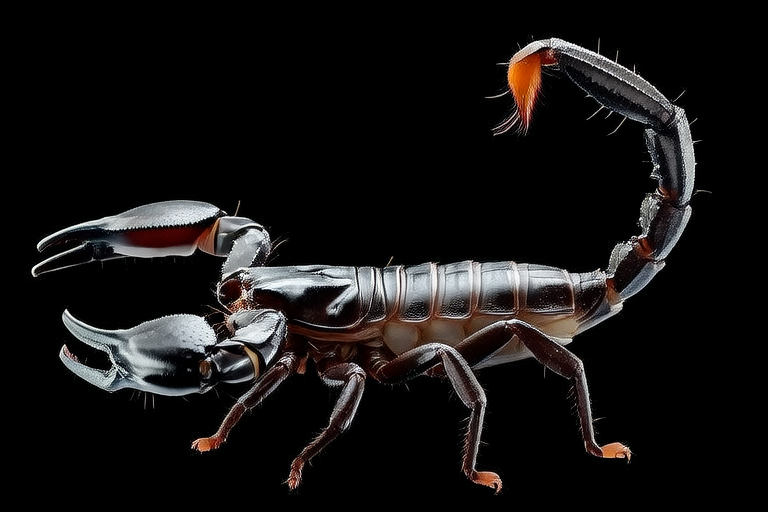
Heterometrus spinifer, commonly known as the Asian forest scorpion, is a fascinating creature native to Southeast Asia. This scorpion is part of the family Scorpionidae and is characterized by its robust body structure and formidable appearance. With its elongated tail, large claws, and venomous stinger, the Asian forest scorpion is a formidable predator in its environment. Despite its intimidating looks, it plays a crucial role in maintaining ecological balance within its habitat.
Physical Characteristics
The Heterometrus spinifer boasts a dark brown to black coloration, which provides excellent camouflage in its natural habitat. The scorpion’s exoskeleton is covered with small spines, particularly noticeable along the edges of its carapace and tail. These spines serve multiple purposes, including defense and enhancing grip when climbing surfaces. Its pincers, or pedipalps, are strong and adapted for grasping prey and defending against threats. The tail, equipped with a venomous stinger, is used primarily for self-defense rather than hunting, although it can also be utilized in capturing smaller insects.
Natural Habitat and Diet
Native to the dense forests of Southeast Asia, Heterometrus spinifer thrives in humid environments with ample vegetation. It is often found under logs, rocks, and other sheltered areas where it can remain hidden from predators. The scorpion is nocturnal, emerging at night to hunt for food. Its diet consists mainly of insects, spiders, and other small invertebrates. Occasionally, it may consume vertebrates like lizards or small frogs. Hunting techniques involve ambush predation, where the scorpion waits patiently until prey comes within reach before striking with its powerful claws.
Defensive Mechanisms and Unique Behaviors
One of the lesser-known facts about Heterometrus spinifer is its remarkable ability to defend itself against potential threats. When threatened, this scorpion employs several defensive strategies. Firstly, it raises its tail in a classic scorpion stance, displaying its stinger as a warning to would-be attackers. If the threat persists, the scorpion may release a foul-smelling secretion from its scent glands located near the base of the tail. This secretion contains various compounds designed to deter predators through smell alone.
In addition to these defensive measures, Heterometrus spinifer exhibits unique behaviors that contribute to its survival. For instance, during mating season, males engage in elaborate courtship dances involving movements of their pedipalps and abdomen. These displays are believed to communicate fitness and readiness to mate, ensuring successful reproduction. Furthermore, females display maternal care by guarding their eggs until they hatch, protecting the offspring from harm.
Myths and Misconceptions
Despite being well-known among entomologists, there exist several myths and misconceptions surrounding Heterometrus spinifer. One common myth suggests that all scorpions glow under ultraviolet light due to their fluorescent cuticles. While it is true that some species exhibit fluorescence, this phenomenon does not apply universally across all scorpion species, including Heterometrus spinifer. Another misconception holds that scorpions always deliver lethal doses of venom when they sting humans. In reality, most scorpion stings cause localized pain and swelling but rarely lead to serious health complications unless the victim has an allergic reaction.
Adaptations for Survival
Heterometrus spinifer has evolved numerous adaptations over millions of years to survive in its challenging environment. One notable adaptation involves its sensory capabilities. Equipped with highly sensitive hairs on its legs called trichobothria, the scorpion can detect minute vibrations in the air and ground, allowing it to locate prey even in complete darkness. Additionally, its exoskeleton contains chitin, a tough protein-based material that provides protection against physical damage while remaining lightweight enough for efficient movement.
Recent Studies and Discoveries
Recent research has shed new light on aspects of Heterometrus spinifer biology previously unknown to scientists. A study published in 2021 revealed that female scorpions possess specialized structures on their abdomens called epigynal shields. These structures play a critical role in egg development by providing additional support during gestation. Another exciting discovery pertains to the composition of the venom produced by Heterometrus spinifer. Scientists have identified novel peptides within the venom that hold promise for developing new medical treatments, particularly in fields such as pain management and cancer therapy.
Moreover, ongoing investigations into the social behavior of these scorpions suggest they may form complex societies similar to those observed in ants and bees. Preliminary findings indicate cooperative interactions between individuals within colonies, including shared responsibilities for nest maintenance and defense. Further research will undoubtedly uncover more intriguing insights into the social dynamics of Heterometrus spinifer communities.
Conclusion
The Asian forest scorpion, Heterometrus spinifer, remains one of nature’s most captivating creatures. From its impressive physical attributes to its sophisticated defensive mechanisms and unique behaviors, this species continues to fascinate both amateur enthusiasts and seasoned researchers alike. By dispelling myths and highlighting lesser-known facts, we hope to inspire greater appreciation for these remarkable arachnids and encourage continued exploration of their mysteries. As scientific understanding deepens, so too will our admiration for the intricate adaptations that allow Heterometrus spinifer to thrive in its dynamic ecosystem.
