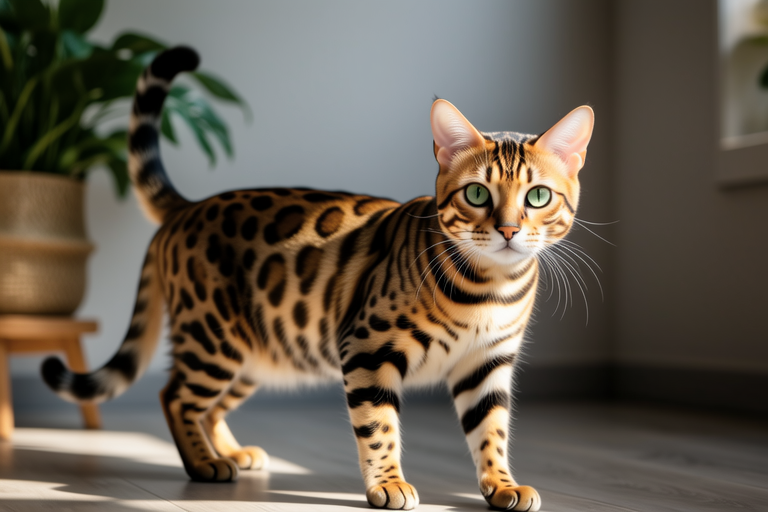
Bengal Cats: The Secret Behind Their Wild Stripes
Introduction
With their striking appearance and playful personalities, Bengal cats have captured the hearts of many cat lovers around the world. These domesticated felines are known for their sleek, spotted coats that resemble those of their wild ancestors, the Asian leopard cat. In this article, we will delve into the fascinating world of Bengal cats, exploring their origins, genetic traits, care requirements, and more.
The Origins of Bengal Cats
Bengal cats were first developed in the 1960s by crossing domestic cats with the Asian leopard cat, a small wild feline native to Southeast Asia. The goal was to create a domestic cat with the exotic look of its wild counterpart but with a friendly and affectionate temperament suitable for family life. Over several generations of selective breeding, breeders managed to produce a cat that retains the wild beauty of its ancestor while being entirely safe and enjoyable as a pet.
Genetic Traits and Coat Patterns
The distinctive stripes and spots on Bengal cats are a result of specific genetic mutations. One such mutation is the taqpep gene, which is responsible for the leopard-like spotting pattern seen in these cats. This gene plays a crucial role in determining the distribution of melanin, the pigment responsible for skin and fur coloration. Another important gene involved in the Bengal’s coat pattern is the agouti gene, which influences the expression of black and brown pigments. Together, these genes contribute to the mesmerizing array of colors and patterns that make Bengal cats so unique.
Scientists have also discovered that the kit ligand gene, which is associated with hair length, is another factor in the development of the Bengal’s luxurious, short, and dense coat. This gene helps explain why Bengal cats have such a plush and glossy appearance, further enhancing their resemblance to their wild relatives.
Comparison with Wild Ancestors
Despite their striking similarities to their wild ancestors, Bengal cats are fully domesticated and pose no threat to humans or other animals. They are much smaller than their wild counterparts, typically weighing between 8 to 15 pounds, and their temperament is far more docile. While Asian leopard cats are solitary and elusive creatures, Bengal cats are social, playful, and often bond closely with their human families.
One notable difference between Bengal cats and their wild relatives is their vocalization. While wild cats tend to be relatively quiet, Bengal cats are known for their vocal nature, often chirping, trilling, and making other sounds to communicate with their owners. This trait is thought to be inherited from their domestic ancestors, making them particularly engaging pets.
Care Requirements and Common Behaviors
Bengal cats require regular grooming due to their dense coats, which can become matted if not properly maintained. Brushing your Bengal cat at least once a week will help keep their coat healthy and reduce shedding. Additionally, providing plenty of mental and physical stimulation is essential for these active and intelligent cats. Interactive toys, climbing structures, and playtime are all great ways to keep your Bengal cat happy and engaged.
Bengal cats are known for their curiosity and high energy levels. They love to explore their surroundings and are often found climbing and jumping on furniture, shelves, and even windowsills. Providing your Bengal cat with vertical spaces to climb and perch can help satisfy their natural instincts. Regular exercise is also important for maintaining their health and preventing obesity.
These cats are generally healthy and long-lived, with an average lifespan of 12 to 16 years. However, like all breeds, they may be prone to certain health issues. Responsible breeders screen for genetic disorders and provide health guarantees to ensure the well-being of their kittens.
Myths About Their Wild Nature
One common misconception about Bengal cats is that they retain some of the aggressive and unpredictable behavior of their wild ancestors. While it is true that Bengal cats can be more energetic and independent than some other domestic breeds, they are not inherently dangerous or difficult to handle. With proper socialization and training, Bengal cats can be loving, affectionate pets that thrive in a home environment.
Another myth is that Bengal cats cannot be trusted around children or other pets. While it is always important to supervise interactions between pets and young children, Bengal cats can coexist peacefully with other animals when introduced gradually and given time to acclimate. Early socialization and positive reinforcement training can help ensure a harmonious household.
Tips for Potential Owners
If you’re considering adopting a Bengal cat, there are several factors to keep in mind. First, ensure that you choose a reputable breeder who prioritizes the health and well-being of their cats. Ask to see health clearances and certifications to verify that the breeder has taken steps to prevent genetic disorders.
Prepare your home for your new Bengal cat by creating a safe and stimulating environment. Provide plenty of scratching posts, toys, and climbing structures to keep your cat entertained. Consider enrolling in a kitten training class to learn techniques for socializing and handling your Bengal cat.
Lastly, remember that Bengal cats are highly intelligent and can be trained to perform simple tricks and commands. Positive reinforcement training, using treats and praise, can help strengthen the bond between you and your cat.
Conservation Efforts Related to Wild Counterparts
The success of the Bengal cat breeding program has helped raise awareness about the plight of their wild ancestors, the Asian leopard cats. Conservation organizations are working tirelessly to protect these endangered species and their habitats. By supporting these efforts, Bengal cat owners can contribute to the preservation of these beautiful creatures in the wild.
One way to support conservation efforts is by donating to reputable wildlife organizations or participating in fundraising events. Many zoos and sanctuaries offer volunteer opportunities and educational programs that allow individuals to get involved in conservation work. By learning about and advocating for the protection of wild cat species, Bengal cat owners can help ensure a brighter future for these magnificent animals.
In conclusion, Bengal cats are truly remarkable creatures that combine the wild beauty of their ancestors with the affectionate nature of domestic pets. Understanding their unique characteristics, care requirements, and behaviors can help ensure a rewarding and fulfilling relationship between owner and cat. By embracing the responsibility of pet ownership and supporting conservation efforts, Bengal cat owners can make a positive impact on both their pets and the wider animal kingdom.
