Water Monitors: Nature’s Perfect Blend of Grace and Power
In the realm of reptiles, few creatures embody the perfect fusion of grace and power like the water monitor (Varanus salvator). These formidable lizards, native to Southeast Asia, have long captured the imagination of naturalists and wildlife enthusiasts alike. With their sleek bodies, powerful limbs, and versatile hunting techniques, water monitors stand out as one of nature’s most adaptable and captivating species.
A Unique Place in the Animal Kingdom
The water monitor belongs to the Varanidae family, which includes some of the largest lizards in the world. They are closely related to the Komodo dragon, another legendary reptile known for its predatory prowess. However, what sets water monitors apart is their remarkable ability to thrive both on land and in aquatic environments. This dual adaptation allows them to exploit a wide range of ecological niches, making them a crucial part of many ecosystems across their vast geographic range.
Physical Characteristics: Grace and Power
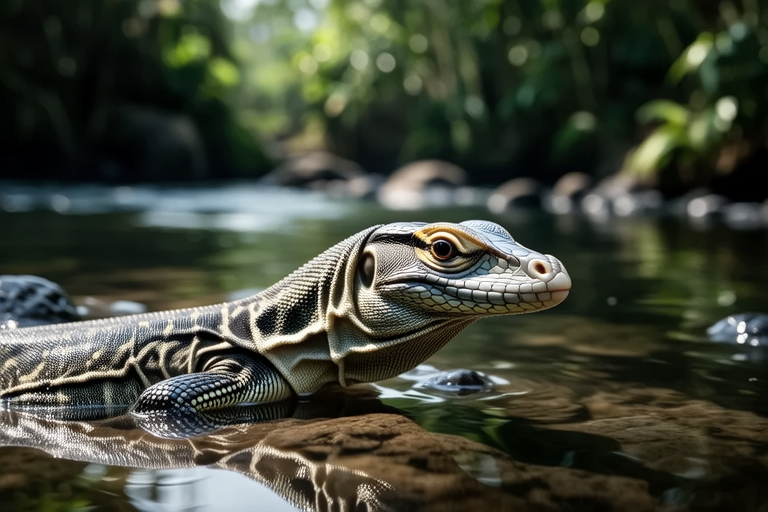
Water monitors are large, robust lizards that can grow up to 3 meters in length, although the average size is around 1.5 meters. Their streamlined bodies are covered in smooth, dark scales that provide excellent camouflage in their natural habitats. The tail, accounting for about half of their total length, is laterally compressed, acting as a powerful swimming aid and a defensive weapon. Their muscular limbs, equipped with sharp claws, enable them to move swiftly through dense vegetation, swim efficiently, and climb trees with ease.
Their heads are elongated and flattened, featuring a keen sense of smell and sight. Water monitors possess forked tongues, similar to snakes, which help them detect chemical signals in the environment. This heightened sensory perception aids in locating prey and avoiding predators. Additionally, their strong jaws are lined with rows of sharp teeth, allowing them to seize and subdue a variety of prey items.
Habitat, Diet, and Behavior: Adaptability Unleashed
Water monitors are highly adaptable and can be found in diverse habitats such as mangrove swamps, rainforests, grasslands, and even urban areas. They are particularly abundant near freshwater sources, including rivers, lakes, and rice paddies, where they hunt for fish, amphibians, and other small animals. Their preference for aquatic environments has earned them the name ‘water monitor.’
These omnivorous lizards have a varied diet that includes insects, crabs, frogs, birds, rodents, and even carrion. Their opportunistic feeding habits allow them to survive in different environments and adapt to changing food availability. Water monitors are also known for their scavenging behavior, often feeding on dead animals or leftovers from larger predators.
Behaviorally, water monitors are solitary and territorial, establishing home ranges that they defend vigorously against intruders. They are active during the day and spend much of their time basking in the sun to regulate their body temperature. When threatened, they can retreat into the water, using their powerful tails to propel themselves away from danger. Despite their formidable appearance, water monitors are generally shy and will avoid confrontation unless provoked.
Role in Ecosystems and Conservation Status
Water monitors play a vital role in maintaining the balance of their ecosystems. As apex predators, they control populations of smaller animals, preventing overgrazing and excessive predation on plant life. Their scavenging behavior also helps to clean up the environment, removing dead and decaying matter. In agricultural areas, water monitors can be beneficial by controlling pest populations, such as rats and insects.
Despite their importance, water monitors face numerous threats due to human activities. Habitat destruction, deforestation, and wetland drainage have reduced their natural habitats, forcing them to live in closer proximity to humans. Additionally, water monitors are hunted for their meat, skin, and traditional medicine, leading to significant population declines in some regions. As a result, several subspecies of water monitors are listed as endangered or vulnerable by the International Union for Conservation of Nature (IUCN).
Conservation efforts are underway to protect water monitors and their habitats. Many countries have implemented laws to regulate hunting and trade, while others have established protected areas where these lizards can thrive without interference. Education programs aimed at raising awareness about the importance of water monitors and their conservation needs are also being conducted in local communities.
Fascinating Facts and Myths
Water monitors are surrounded by numerous myths and legends, some of which have persisted for centuries. One popular myth suggests that water monitors possess supernatural powers, such as the ability to heal wounds or bring good fortune. While these beliefs may lack scientific evidence, they highlight the cultural significance of these lizards in many societies.
One of the most intriguing aspects of water monitors is their intelligence. Studies have shown that they exhibit problem-solving skills and can learn from experience. For instance, water monitors have been observed using tools, such as sticks, to extract food from tight spaces. This level of cognitive ability is rare among reptiles and underscores the complexity of their behavior.
Another fascinating fact about water monitors is their exceptional endurance. They can remain submerged for extended periods, sometimes up to 30 minutes, thanks to their efficient respiratory system. This adaptation allows them to escape predators or ambush prey underwater. Additionally, water monitors have been recorded diving to depths of up to 4.5 meters, further demonstrating their aquatic capabilities.
Despite their impressive abilities, water monitors face ongoing challenges in adapting to a rapidly changing world. Climate change, pollution, and invasive species pose additional threats to their survival. By understanding and appreciating these remarkable creatures, we can work towards ensuring their continued existence in the wild.
Water monitors are truly a marvel of evolution, combining elegance with strength to create one of nature’s most fascinating creatures. From their sleek bodies to their versatile hunting techniques, these lizards offer a glimpse into the incredible diversity of life on our planet. As we continue to explore and learn about water monitors, let us also strive to protect them and the ecosystems they inhabit, ensuring that future generations can marvel at these magnificent reptiles.
