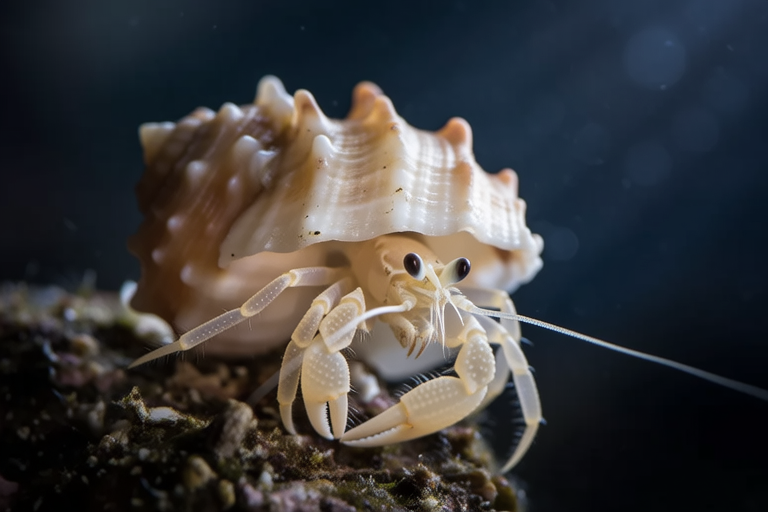
The Enigmatic Pea Crabs: Tiny Guardians of the Ocean
Pea crabs (Pinnotheres) are among the smallest and most intriguing members of the crustacean family. Despite their diminutive size, these crustaceans play an important role in marine ecosystems, forming unique symbiotic relationships with various mollusks. Their elusive nature makes them a challenge for researchers to study, yet their fascinating behaviors and adaptations make them worthy subjects of investigation.
Unique Characteristics and Habitat
Pea crabs are aptly named for their small size, which typically ranges from 3 to 15 millimeters in length. Their compact bodies are covered in a hard exoskeleton, which varies in color from light brown to greenish-blue, allowing them to blend seamlessly into their surroundings. This camouflage is crucial for their survival, as it helps them avoid predators while they reside within the protective confines of their host mollusks.
These crabs are primarily found in coastal waters, where they inhabit bivalves such as oysters, scallops, and mussels. They can also be found in the mantle cavity of certain gastropods, including abalone and whelks. The preferred habitats of pea crabs are characterized by rocky shores, estuaries, and seagrass beds, where food is abundant and shelter is easily accessible. Their ability to thrive in diverse environments underscores their adaptability and resilience.
Symbiotic Relationships
Pea crabs have evolved a remarkable relationship with their hosts, engaging in a form of symbiosis known as commensalism. In this arrangement, the pea crab benefits from the protection and resources provided by its host, while the host remains unaffected. This mutualistic relationship is beneficial for both parties, as the crabs help to clean the gills of their hosts, removing debris and parasites that could otherwise compromise the health of the mollusk.
The most well-known association between pea crabs and their hosts is with oysters. Inside the oyster’s shell, the pea crab finds a safe haven from predators and a steady supply of food. The oyster, in turn, benefits from the cleaning services provided by the crab. This relationship is so strong that some species of pea crabs are almost exclusively found in oysters. Other pea crabs have adapted to live inside scallops, where they feed on plankton trapped by the scallop’s feeding apparatus. These crabs often share the scallop’s movements, riding along as the scallop swims through the water.
Diet and Feeding Habits
Pea crabs are omnivorous scavengers, meaning they consume a wide variety of organic matter, including detritus, algae, and small organisms. Their diet is highly dependent on the type of mollusk they inhabit, as well as the availability of food within their immediate environment. For instance, pea crabs living in oysters may feed on the plankton filtered by their host, while those residing in scallops might benefit from the food particles captured by the scallop’s feeding apparatus.
The crabs’ feeding habits are closely linked to their host’s physiology. For example, the crabs can extend their feeding appendages outside the host’s body to capture floating particles or even engage in limited foraging outside the shell. This behavior allows them to supplement their diet and maintain their energy levels, ensuring their survival within the protected environment of their host.
Reproduction and Life Cycle
The reproductive cycle of pea crabs is a fascinating aspect of their biology. Mating occurs within the safety of the host mollusk, with the female crab laying her eggs on the male’s abdomen. The male then carries the fertilized eggs until they hatch, at which point the larvae are released into the surrounding water. The larvae drift freely in the ocean currents before settling onto a suitable host, where they undergo metamorphosis into juvenile crabs.
The life cycle of pea crabs is closely tied to the reproductive cycles of their host mollusks. This synchronization ensures that the young crabs have access to a ready-made home and food source upon hatching. The timing of mating and egg-laying is crucial for the success of the next generation, as it determines the likelihood of finding a suitable host in the vast and unpredictable ocean.
Challenges in Studying Pea Crabs
Despite their importance in marine ecosystems, pea crabs remain relatively understudied due to their small size and elusive nature. Researchers face significant challenges when attempting to observe and study these tiny crustaceans in their natural habitats. One of the primary obstacles is the difficulty in locating and accessing the crabs within their host mollusks. The shells of oysters and scallops can be thick and difficult to open without damaging the delicate crabs inside.
Another challenge is the transient nature of the pea crab’s life cycle. As larvae, they drift through the water column, making it nearly impossible to track their movements or predict where they will settle. Once they find a host, they remain hidden within the protective shell, further complicating efforts to study their behavior and interactions with their environment. Despite these challenges, the potential insights gained from studying pea crabs make the effort worthwhile.
Why Pea Crabs Are Worth Learning About
Pea crabs are fascinating creatures that offer valuable insights into the complex relationships that exist within marine ecosystems. Their symbiotic relationships with mollusks highlight the intricate web of dependencies that support life in the oceans. By understanding the dynamics of these relationships, scientists can gain a deeper appreciation for the interconnectedness of marine life and the delicate balance that must be maintained for the health of our oceans.
Furthermore, pea crabs serve as indicators of environmental health. The presence or absence of these tiny crustaceans can provide clues about the overall condition of their habitats, including water quality, food availability, and the prevalence of predators. As climate change continues to impact marine ecosystems, studying pea crabs can help us better understand how these factors are changing and what steps can be taken to protect these vital habitats.
In conclusion, pea crabs are a remarkable species with unique characteristics, behaviors, and adaptations that make them worthy of study. Their small size and elusive nature present challenges for researchers, but the potential rewards of gaining a deeper understanding of these tiny guardians of the ocean are immense. By continuing to explore the world of pea crabs, we can unlock new knowledge about marine ecosystems and work towards preserving the health and diversity of our oceans for future generations.
