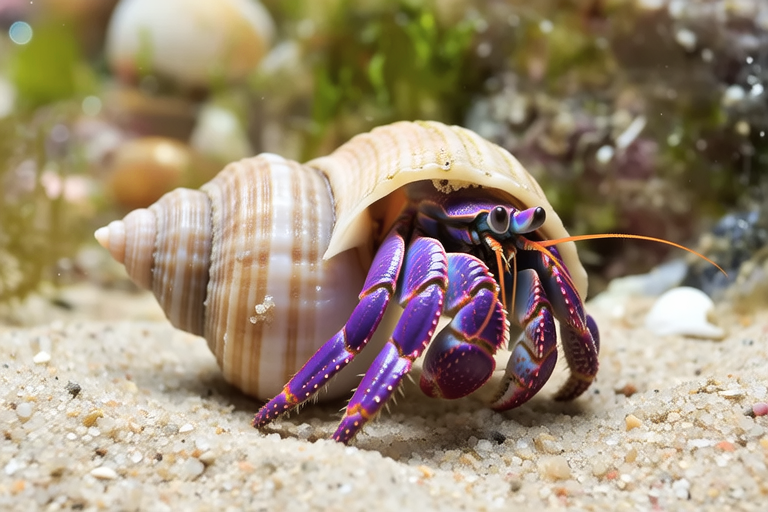
Exploring the World of Hermit Crabs
Introduction
Hermit crabs are fascinating creatures that have captured the hearts of many pet enthusiasts. These crustaceans are known for their unique ability to inhabit empty shells, which they carry around for protection. This article will delve into the natural habitats, dietary needs, and behaviors of hermit crabs, both in the wild and in captivity. We will also address common myths, provide tips for setting up an optimal tank environment, and highlight the responsibilities of owning hermit crabs.
Natural Habitats
Wild hermit crabs are found in tropical and subtropical regions, particularly along coastal areas. They thrive in environments with high humidity, such as beaches, mangroves, and coral reefs. In these settings, hermit crabs play a crucial role in maintaining the ecosystem by breaking down organic matter and recycling nutrients. Their natural habitats offer a wide variety of shells for them to choose from, ensuring that each crab finds a suitable home.
Dietary Needs
Hermit crabs are omnivorous scavengers, feeding on a diverse range of foods in the wild. Their diet typically includes algae, decaying plant matter, small marine animals, and even the remains of other dead organisms. When kept as pets, hermit crabs can be fed a mix of fresh and dried foods, including fruits, vegetables, and proteins like fish flakes or shrimp. It is important to avoid feeding them processed human foods, as these can be harmful to their health.
Unique Behaviors
Hermit crabs exhibit several unique behaviors that make them intriguing subjects for study. One of the most notable is their ability to change shells when necessary. As they grow, hermit crabs outgrow their current shells and must find larger ones to accommodate their expanding bodies. This process involves carefully selecting a new shell, moving out of the old one, and ensuring a secure fit in the new one. Additionally, hermit crabs are social creatures and often live in groups, interacting with one another through touch and scent.
Differences Between Wild and Domestic Lifestyles
The lifestyle of hermit crabs differs significantly between the wild and domestic settings. In the wild, hermit crabs face numerous challenges, including predation, competition for resources, and environmental changes. These factors contribute to their high mortality rates and limited life spans. Conversely, domestic hermit crabs enjoy a more stable and protected environment, where they are provided with ample food, water, and shelter. However, this does not mean that domestic hermit crabs are exempt from challenges. Proper care and attention are essential to ensure their well-being.
Common Myths About Hermit Crabs
Despite their popularity as pets, there are several misconceptions about hermit crabs that need to be addressed. One common myth is that hermit crabs do not require much care or attention. While it is true that hermit crabs are relatively low-maintenance compared to other pets, they still have specific needs that must be met. Another misconception is that hermit crabs are solitary creatures. In reality, hermit crabs are social animals that benefit from living in groups. Finally, some people believe that hermit crabs can survive indefinitely without water. While hermit crabs can tolerate dry conditions for short periods, they require access to fresh water for drinking and bathing.
Tips for Setting Up an Optimal Tank Environment
To create an ideal habitat for your hermit crabs, start by choosing a spacious tank that allows for plenty of movement and exploration. The tank should be equipped with a substrate, such as sand or coconut fiber, to facilitate burrowing and climbing. Additionally, include various shells of different sizes and shapes to provide options for changing homes. Ensure that the tank has adequate ventilation and is kept at a consistent temperature and humidity level, ideally between 75-85°F (24-29°C) and 70-80% humidity, respectively. Providing hiding spots, such as rocks or driftwood, will help reduce stress and promote natural behaviors.
Molting Process
Molting is a vital process for hermit crabs, during which they shed their exoskeleton and grow a new one. Prior to molting, hermit crabs may become less active and seek out secluded areas within the tank. During the actual molt, the crab will remain hidden for several days or weeks while its new exoskeleton hardens. It is crucial to avoid disturbing a molting hermit crab, as this could lead to injury or death. Once the molt is complete, the crab will emerge with a new, larger shell and resume its normal activities.
Social Interactions Within a Tank
Hermit crabs are social animals that benefit from living in groups. In a tank setting, they engage in various forms of interaction, including grooming one another, sharing food, and playing together. It is important to provide enough space and resources to prevent overcrowding and competition for resources. Additionally, introducing new hermit crabs to an established group should be done gradually to minimize stress and aggression.
