The Clever and Mischievous World of Squirrels
In the bustling ecosystems of forests, parks, and urban environments, one small creature stands out for its remarkable escapades: the squirrel. These nimble rodents are not just cute and cuddly; they are also highly intelligent and resourceful. From outwitting predators to dodging human traps, squirrels have developed an array of survival tactics that have earned them the reputation of being nature’s own escape artists. Let us delve into their world and explore the fascinating ways they protect themselves, secure food, and maintain their territory.
Agility and Escape Tactics
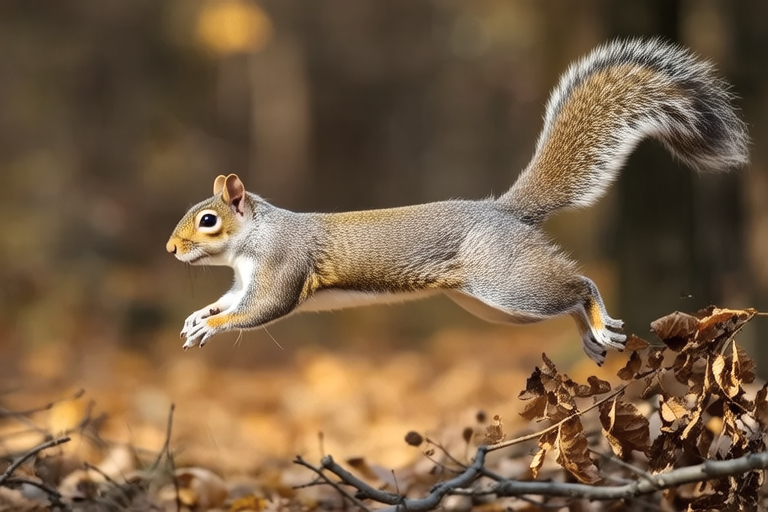
One of the most impressive aspects of squirrel behavior is their agility. Their bushy tails act as balancing tools, allowing them to navigate complex tree branches with ease. This dexterity is crucial when it comes to escaping predators. For instance, red squirrels (Sciurus vulgaris) can leap distances up to 10 feet between trees, making it nearly impossible for ground-dwelling predators like foxes or weasels to catch them. Additionally, their ability to climb vertically up trees and move along narrow branches provides a significant advantage over aerial predators such as hawks and owls.
Gray squirrels (Sciurus carolinensis), found abundantly in North America, are particularly adept at evading danger. They can run at speeds of up to 20 miles per hour and perform rapid changes in direction, confusing potential attackers. In urban settings, gray squirrels often exploit man-made structures to their advantage. They will jump from rooftops to fences or even use power lines to travel great distances quickly. This adaptability has allowed them to thrive in cities where natural habitats are scarce.
Intelligence and Problem Solving
Squirrels are not only physically agile but also possess impressive cognitive abilities. Recent studies have shown that squirrels can remember the locations of thousands of buried nuts, demonstrating exceptional spatial memory. This skill is crucial during winter when food sources become scarce. A study conducted by Dr. Lucia Jacobs at the University of California, Berkeley, revealed that squirrels can recall the precise location of each nut they bury, even after several months. This level of memory retention is comparable to that of some primates and marine mammals.
Furthermore, squirrels exhibit problem-solving skills that rival those of many larger animals. Researchers at the University of Exeter observed that eastern gray squirrels could learn how to open complex locks within minutes. In experiments designed to test their ingenuity, squirrels were presented with various puzzle boxes containing hidden treats. After initial attempts failed, the squirrels quickly adapted their approach, manipulating the mechanisms with increasing efficiency until they succeeded in retrieving the reward. Such adaptability underscores the importance of cognitive flexibility in their survival strategies.
Outsmarting Humans
Despite our best efforts, squirrels continue to outwit humans in numerous ways. One common example involves bird feeders. Many people set up feeders in hopes of attracting birds, only to find that squirrels have commandeered the setup. These clever creatures will climb poles, leap from nearby structures, or even dig under the feeder to access the seeds. Some homeowners resort to squirrel-proof models, but even these are not foolproof. Squirrels have been known to chew through plastic or metal barriers, demonstrating their determination.
Urban squirrels have also learned to exploit human waste and discarded food items. In areas where garbage bins are improperly sealed, squirrels will rummage through the contents, finding snacks that would otherwise go to waste. This scavenging behavior has contributed to their success in adapting to city life. However, it is important to note that feeding wild animals, including squirrels, can lead to health issues and disrupt natural foraging behaviors.
Behavioral Adaptations
Squirrels display a wide range of behavioral adaptations that enhance their chances of survival. One notable example is their tendency to engage in “scatter hoarding,” where they bury individual nuts and seeds in multiple locations rather than storing them all in one place. This strategy reduces the risk of losing their entire cache to theft by other animals. Studies have shown that squirrels will even pretend to bury food if they sense potential thieves watching, a behavior known as “deceptive caching.”
Another interesting adaptation is their ability to recognize and avoid areas where they have previously been caught. When trapped in a live-capture device, squirrels learn from the experience and become more cautious in similar situations. This learning process helps them avoid future encounters with traps, further illustrating their intelligence and adaptability.
Recent Studies on Squirrel Cognition
Advancements in technology have enabled researchers to gain deeper insights into squirrel cognition. Neuroimaging techniques, such as functional magnetic resonance imaging (fMRI), have been used to study brain activity in squirrels during various tasks. These studies reveal that certain regions of the brain, particularly those associated with memory and spatial navigation, are highly active when squirrels engage in caching activities. This suggests that the mental processes involved in remembering the locations of hidden food items are complex and require significant cognitive effort.
Moreover, recent research has explored the social dynamics among squirrel populations. While traditionally considered solitary animals, studies indicate that squirrels may form loose social bonds based on kinship or shared territories. These relationships can influence behavior, such as cooperative caching or mutual defense against intruders. Understanding these interactions provides valuable information about the social structure of squirrel communities and highlights the importance of context in shaping their behaviors.
Captivating Stories of Squirrel Ingenuity
One captivating story involves a red squirrel named Rusty who became famous for his antics in a Canadian park. Rusty was known for his boldness, often approaching visitors to beg for snacks. He would sit patiently beside picnic tables, waiting for someone to offer him a peanut. However, Rusty’s true talent lay in his ability to retrieve fallen nuts from visitors’ hands without causing a disturbance. His gentle demeanor and cleverness endeared him to park-goers, earning him the nickname “the gentleman squirrel.”
Another tale comes from a university campus where a group of gray squirrels had discovered a unique way to access food from vending machines. By repeatedly pressing buttons on the machine, they managed to dispense snacks without purchasing anything. Campus security attempted to address this issue by modifying the vending machines, but the squirrels soon adapted their methods, continuing to outsmart the system. This incident highlighted the squirrels’ persistence and innovative thinking.
Conclusion
The world of squirrels is a testament to the ingenuity and resilience of nature’s smallest inhabitants. Through their agility, intelligence, and resourcefulness, squirrels have mastered the art of survival. Whether evading predators, solving puzzles, or exploiting human resources, these clever creatures consistently demonstrate their remarkable abilities. As we continue to study and appreciate the intricate behaviors of squirrels, we gain a deeper understanding of the complexities of animal cognition and adaptability. So next time you spot a squirrel scurrying across your path, take a moment to marvel at the wild escape artist that lives among us.
