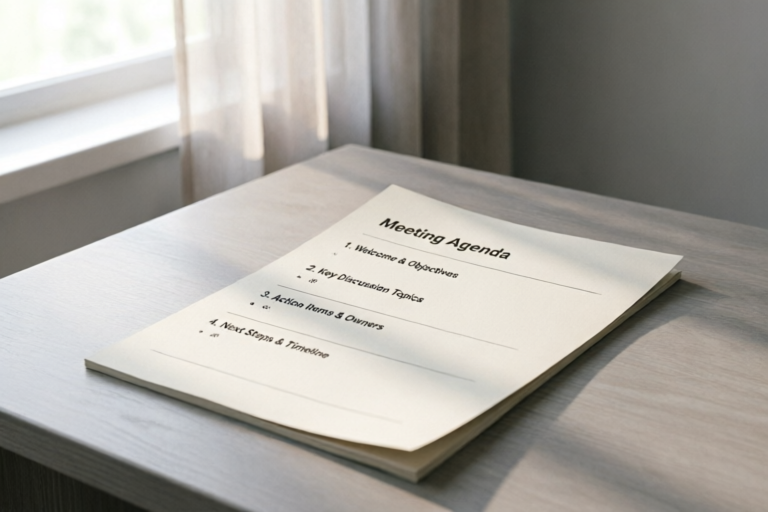
Ready-to-Use Meeting Agenda Document Template
Efficient Meetings Start With a Well-Structured Agenda
Introduction to Meeting Agendas
Effective meetings are the backbone of any successful business operation. However, without proper planning and structure, even the most well-intentioned gatherings can become chaotic and unproductive. This is where a meeting agenda comes into play. A well-crafted agenda not only ensures that all topics are covered but also keeps the discussion focused and on track.
In this article, we will explore the importance of having a structured meeting agenda and delve into the benefits of using a ready-to-use template. We'll provide an overview of what you can expect from this guide and how it can help improve your organizational processes.
Key Components of a Meeting Agenda Template
Purpose Section
The purpose section of your meeting agenda should clearly define the goals of the meeting. This helps set expectations for participants and ensures everyone is aligned on the objectives. For example, if the goal is to discuss new product features, make sure this is explicitly stated at the beginning of the agenda.
Time Allocation
Structuring time blocks for each topic is crucial for maintaining control over the meeting's flow. Allocate enough time for each item while being mindful of overall time constraints. This prevents rushed discussions and ensures that all points have adequate attention.
Action Items
Assigning responsibilities and deadlines within the action items section helps keep tasks accountable and ensures follow-through after the meeting. Make sure these assignments are specific and actionable so that attendees know exactly what they need to do post-meeting.
Attendees List
Including a comprehensive list of attendees ensures that all relevant stakeholders are involved in the discussion. This promotes inclusivity and ensures that no critical voices are left out.
Follow-Up Actions
After the meeting, it’s essential to summarize the outcomes and next steps. This ensures continuity and provides clarity on future actions required based on the decisions made during the meeting.
Step-by-Step Guide to Using the Template
Downloading the Template
First, download a reliable meeting agenda template from trusted sources such as Microsoft Office templates or Google Docs. These templates often come pre-formatted with placeholders for different sections like purpose, time allocation, action items, etc.
Customizing the Template
Once downloaded, customize the template according to your organization's specific needs. Adjust the layout, add or remove sections as necessary, and input relevant information about upcoming meetings.
Tips for Effective Meeting Preparation
- Communicate the agenda: Send out the finalized agenda ahead of time so participants can prepare adequately.
- Encourage feedback: Allow participants to suggest additional topics or provide input on the proposed schedule.
- Prepare materials: Gather any documents, reports, or presentations needed for the meeting beforehand.
Best Practices for Facilitating Productive Meetings
- Stay on topic: As the facilitator, ensure that discussions remain focused on the agenda items.
- Encourage participation: Foster an environment where all attendees feel comfortable contributing their ideas.
- Summarize regularly: Periodically recap the progress made during the meeting to keep everyone aligned.
Benefits of Utilizing a Ready-to-Use Template
Using a pre-designed meeting agenda template offers numerous advantages:
- Increased Efficiency: Templates save time by providing a framework that minimizes the need for extensive customization.
- Better Focus: With clear objectives outlined, meetings tend to stay more focused on key topics rather than veering off course.
- Enhanced Collaboration: Involving all relevant stakeholders through the agenda promotes better teamwork and decision-making.
- Reduced Risks: Following a structured format reduces the likelihood of overlooking important points or failing to document crucial decisions.
Common Mistakes to Avoid When Creating Your Own Template
- Overloading the Agenda: Be cautious not to include too many items; prioritize quality over quantity.
- Insufficient Time Allocation: Ensure each topic gets adequate time to be thoroughly discussed.
- Ignoring Stakeholders: Make sure all necessary parties are included in the attendee list.
- Skipping Follow-Up Actions: Always document next steps and assign responsible individuals for follow-ups.
Conclusion and Next Steps
In summary, implementing a ready-to-use meeting agenda template can significantly enhance the effectiveness of your meetings. By following the guidelines provided in this article, you can create structured, productive sessions that lead to better outcomes.
We encourage you to try out the provided template today and see firsthand how it improves your meeting dynamics. For further reading and continuous improvement, consider exploring additional resources such as books on meeting management or online courses dedicated to leadership skills.
Comments

The follow-up section is a game changer. No more missed action items.

Great for ensuring everyone knows their role. Made our teamwork smoother.

Saved this template for future use. Thanks!

Would love to see an option where we can add breakout sessions to the agenda.

This saved me so much time. Now our meetings have clear goals and action items.
How do I tweak this to fit my remote team's needs? Any tips?
Used this template last week for our quarterly planning meeting. It really helped keep things organized!