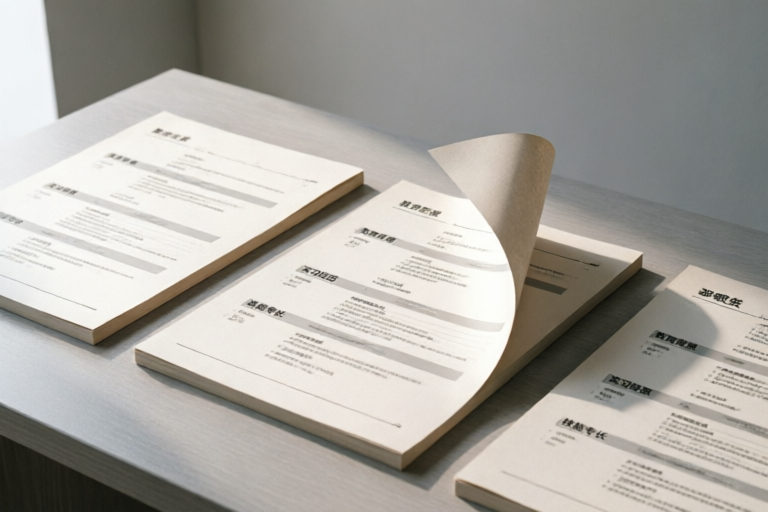
Ready made resume templates for recent graduates seeking full time work
Your Degree, Your Future, Your Professional Edge
Ready Made Resume Templates for Recent Graduates Seeking Full-Time Work
Navigating the transition from university campus to the corporate world can feel overwhelming. You have spent years earning your degree, but when it comes to securing that first full-time position, you often find yourself staring at a blinking cursor on a blank document. This is where the struggle begins: balancing academic history with professional expectations, and trying to convey competence without a deep reservoir of work experience.
This is the reality for millions of recent graduates worldwide. Every year, companies hire thousands of fresh talent, yet the competition is fiercer than ever. In this landscape, presentation matters just as much as capability. That is why utilizing ready-made resume templates for recent graduates seeking full-time work has become a crucial strategy. These pre-designed structures offer more than just aesthetics; they provide a framework that aligns with hiring manager expectations and Applicant Tracking System (ATS) requirements.
In this comprehensive guide, we will explore how to leverage these templates effectively. From understanding why they matter to selecting the right design for your industry, optimizing content for specific roles, and finalizing your application, we will cover every step needed to transform you from a student candidate into a competitive applicant.
1. Why Pre-Made Templates Matter for New Graduates
The debate between creating a resume from scratch versus using a template often arises among job seekers. For experienced professionals, customization is key. However, for recent graduates, the argument shifts heavily towards the utility and efficiency of pre-made templates. Let's delve into the core reasons why established designs are your best friend during this critical career phase.
Saving Precious Time for Career Crafting
One of the most immediate benefits of using a template is time management. As a recent graduate, you are likely applying to multiple positions simultaneously. Building a resume layout from scratch involves formatting margins, selecting fonts, organizing spacing, and ensuring consistency across pages. By choosing a well-crafted template, you bypass the structural hurdles and focus entirely on content. Instead of spending five hours figuring out alignment, you spend those hours refining your bullet points and quantifying your internship experiences.
Ensuring ATS Compatibility
Many students overlook the fact that their resume might never be seen by a human eye initially. Before it reaches a recruiter, it passes through an Applicant Tracking System (ATS). This software scans documents for keywords and parses them into databases. Fancy graphics, columns, headers, or complex footers found in custom creative layouts can confuse these systems, causing your data to be misread or rejected entirely.
Pre-made templates specifically designed for job applications are usually coded with ATS compatibility in mind. They use standard fonts, simple tables, and logical heading hierarchies that allow parsing software to extract your contact information, education, and skills accurately. Using these templates ensures that your credentials are indexed correctly, dramatically increasing your chances of passing the digital gatekeeper.
Creating a Polished Look for Limited History
A common fear among graduates is having a sparse resume. "I only have one semester of experience," many think. A poorly designed resume exacerbates this feeling, making gaps look like empty spaces rather than opportunities for growth. Conversely, a professional template guides the eye to your strengths. Through strategic visual hierarchy, templates can emphasize your education, GPA, honors, and relevant projects, pushing your limited work history into a supportive role rather than the main focus.
A polished look signals attention to detail. In almost any industry, being organized and capable of presenting information cleanly is a valued soft skill. A messy DIY resume suggests a lack of organizational ability, whereas a template-based approach demonstrates professionalism before you even walk into the interview room.
2. Selecting the Ideal Design Based on Your Field
Not all templates are created equal. What works for a graphic designer might destroy the prospects of a financial analyst. Selecting the ideal design requires an understanding of your industry culture and the unwritten rules of its hiring managers. Here is how to navigate design choices based on your specific career path.
Clean, Minimalist Styles for Corporate Roles
If you are entering traditional sectors such as Accounting, Banking, Law, or Human Resources, elegance lies in simplicity. These industries value precision, conservatism, and clarity. When selecting a template here, look for clean lines, ample white space, and classic serif or sans-serif fonts like Arial, Times New Roman, or Calibri.
Avoid bold colors beyond dark blue, black, or gray. Graphics, icons, or photos should generally be avoided unless the job explicitly requests a portfolio submission. The goal is to create a document that looks stable, reliable, and serious. A minimalist template allows your qualifications to speak without distraction. For example, a structured linear layout where dates are aligned to the left and job titles are bolded communicates order and discipline.
Creative Layouts for Arts and Marketing Industries
Conversely, if you are aiming for roles in Graphic Design, Advertising, Digital Marketing, or Journalism, your resume itself acts as part of your portfolio. Hiring managers in these fields expect creativity. You can utilize templates that feature unique typography, subtle color accents (like a pop of teal or orange), or sidebar layouts that separate sections efficiently.
However, remember the rule of balance: do not sacrifice readability for flair. A creative layout should enhance engagement, not hinder comprehension. Ensure that the design still accommodates ATS scanning capabilities, especially if you are applying to large corporations. In these cases, a "hybrid" template is often best—one that looks modern and distinctive but retains a straightforward text structure for backend scanning.
Tech-Focused Structures for Engineering and IT
For Software Engineers, Data Scientists, and IT Specialists, the priority is functionality and technical proficiency. A two-column template is often preferred here. One column can be dedicated to Technical Skills (Programming Languages, Tools, Frameworks), while the other details Work Experience and Projects.
Highlighting a list of technologies prominently allows recruiters to scan quickly for keywords like Python, Java, AWS, or React. Avoid flashy animations or heavy graphics. Stick to a monospaced font style (like Roboto Mono) for skill lists if you want to subtly signal a coding mindset. The design should reflect a logical system—just as code should.
3. Must-Have Sections for a Recent Graduate Resume
Once you have selected your canvas, you must populate it with the right bricks. Since you lack extensive employment history, you must strategically highlight other areas of your life that demonstrate professional readiness. Every entry-level candidate needs to include the following critical components to build a robust profile.
Education: The Cornerstone
For a graduate, your Education section often takes precedence over your work history. This is non-negotiable. It should be placed near the top of the resume.
- Degree Information: Clearly state your Major, Minor, University Name, and Location.
- GPA: If your GPA is above 3.5, include it. It shows academic diligence.
- Relevant Coursework: List classes that directly relate to the job. If applying for a marketing role, list Consumer Behavior, Brand Management, or Market Research courses. This helps contextualize your theoretical knowledge.
- Honors and Awards: Dean's List, Scholarships, or Academic Competitions validate excellence.
Internships and Practical Experience
Even short-term internships hold immense weight. Treat them exactly like full-time jobs. Do not label them merely as "Experiences." Describe them with action verbs.
Instead of saying "Helped with social media," say "Developed and executed weekly social media strategies that increased engagement by 15%." Focus on results. Even unpaid internships count. If you did research assistance, treat it as project management. This section proves you understand workplace dynamics and can deliver under supervision.
Projects: Showcasing Applied Skills
Since your work history is thin, academic projects become vital proof of competency. Did you lead a team for a capstone project? Build an app for a senior thesis? Organize a charity event? Include a dedicated "Academic Projects" or "Key Projects" section.
Describe the problem, the tools used, and the outcome. For instance: "Led a team of four to analyze consumer trends using SPSS software, resulting in a grade of A+ and publication recommendation." This demonstrates leadership, analytical thinking, and tool proficiency.
Technical and Soft Skills
List hard skills relevant to the field. Software proficiency (Microsoft Office Suite, Adobe Creative Cloud, Salesforce) should be prominent. Don't forget soft skills, but frame them as evidence-based traits. instead of just listing "Communication," imply it through your coursework descriptions.
Consider categorizing skills for better readability: • Languages: Spanish (Fluent), Mandarin (Basic) • Tools: Excel, PowerPoint, Tableau • Technical: HTML/CSS, Python, SQL • Soft: Team Collaboration, Public Speaking
4. How to Optimize Templates for Specific Job Applications
Using a generic template is a mistake. The most successful candidates treat their resume as a living document that evolves with every job application. Optimization means tailoring the content within the template to match the specific desires of the employer.
Keyword Matching Strategies
Every job description (JD) is a secret code written for the ATS. It contains specific keywords that determine rank. If the JD asks for "Project Coordination," and your resume says "Team Leadership," you might lose ground. You must mirror the language.
Actionable Tip: Read the job posting thoroughly. Highlight the nouns and verbs. If they ask for "budget management," ensure that exact phrase appears in your Internship or Project descriptions, provided it is accurate. Update your skills section to match the required tech stack mentioned in the ad.
Highlighting Achievements Over Duties
Templates often encourage you to fill sections with duties (what you were supposed to do). High-performing resumes highlight achievements (what you actually accomplished). Within the template structure, adjust the prominence of bullets.
Use the STAR Method (Situation, Task, Action, Result) to draft these points. Keep the "Situation" brief. Focus on the Action and the Result. Use numbers wherever possible. Percentages, dollar amounts, and time saved are powerful metrics.
Example: Weak: "Responsible for sales data entry." Strong: "Processed over 500 daily data entries with 99% accuracy, reducing report generation time by 4 hours per week."
Customizing the Header and Summary
The "Contact Info" header seems static, but it can be tweaked. Ensure your LinkedIn URL is updated and points to a professional profile. Many modern templates include a "Professional Summary" line below the name.
Customize this sentence for every application. If applying for a Junior Analyst role, summarize yourself as a "Detail-oriented Business Analysis graduate with strong statistical modeling skills." If applying for HR, shift the summary to highlight interpersonal skills and organizational abilities. This small tweak tells the hiring manager, "I am not just applying to everyone; I am applying to YOU."
5. Final Preparation Steps Before Submission
You have drafted your content, chosen a template, and optimized for keywords. But rushing the final submission can undo all your hard work. The final polish separates the serious candidates from the forgettable ones. Follow this checklist before hitting send.
Proofreading and Quality Control
Type-o errors signal carelessness. No matter how perfect your content, a misspelled company name or grammar error can lead to immediate rejection. Run your resume through spell-check, but go further. Print the resume out and read it line-by-line physically. Reading digitally often causes us to skip over errors due to pattern recognition.
Ask a friend, mentor, or career counselor to review it. Fresh eyes catch things that yours do not. They can tell you if the flow feels awkward or if the formatting breaks on different screen sizes.
File Format and Naming Conventions
Most importantly, know which file type to submit. Unless the job specifically requests a .DOCX file, save your resume as a PDF. PDFs preserve formatting across all devices and operating systems. A Word doc might open differently on another computer, causing lines to shift and ruining your carefully designed layout.
Do not name your file "Resume.pdf" or "My Resume 2024.pdf." Recruiters receive hundreds of files daily. Name your file professionally: Lastname_Firstname_Resume_CompanyName.pdf (e.g., Smith_John_Resume_TechCorp.pdf). This makes you searchable and organized for the recruiter's inbox.
Preparing the Synergy Document: Cover Letter
Your resume gets you through the door, but your cover letter invites you in. While some templates suggest omitting it, a well-written cover letter complements your resume perfectly. Use the cover letter to address the "story" that the bullet points in the resume cannot capture. Explain *why* you are passionate about this specific company. Connect your academic background to the company mission. A personalized cover letter, paired with a flawless template resume, creates a cohesive brand identity for you as a candidate.
Conclusion: Taking the Leap with Confidence
Landing your first full-time job after graduation is a milestone that defines the trajectory of your early career. It requires preparation, resilience, and smart strategies. Utilizing ready-made resume templates for recent graduates seeking full-time work is not a shortcut; it is a tactical choice that empowers you to present your potential in the most professional way possible.
By selecting a design that matches your industry, filling it with quantifiable achievements, and rigorously optimizing for both machines and humans, you transform from a nervous student into a poised professional. Remember, the template is just the vessel; your dedication and unique skills are the cargo. Take the time to customize, proofread, and tailor your application for every opportunity. With the right preparation, the job market will respond to your effort. Good luck on your journey forward!
Frequently Asked Questions (FAQ)
Q: Is it okay to have a two-page resume as a fresh graduate?
A: Ideally, keep your resume to one page. However, if you have extensive research publications, significant project portfolios, or multiple high-level internships that require detailed explanation, a second page is acceptable. Just ensure there is no unnecessary white space forcing you to a second page.
Q: Should I include a photo on my resume?
A: In the United States and Canada, photos are generally discouraged as they can lead to bias. In parts of Europe and Asia, including a professional headshot is sometimes expected. Check local norms. Regardless, always maintain a neutral expression and professional attire if you do choose one.
Q: Can I use the same template for different types of jobs?
A: Yes, provided the template is ATS-friendly and adaptable. However, you must change the content (skills and summary) to align with each job. If the roles are vastly different (e.g., Sales vs. Engineering), consider switching the template structure to highlight the most relevant skills for that specific track.
Q: What if I don't have any experience to put in my resume?
A: Focus on transferable skills. Volunteer work, club leadership, sports teams, and major academic assignments all constitute experience. Frame these activities using professional language that emphasizes responsibility, planning, and execution.
Comments

bookmarked this for next semester. huge help before career fair

did you guys optimize the wording? feels like every job description is different

always tell clients to export as pdf. nice reminder here

section on coursework really helped fill the gap since i had no experience

missing git hub link example but otherwise great. added it to skills section manually
comparing clean vs creative is exactly what i needed. corporate jobs are strict lol

honestly didn't think a template could help much but i got 3 interviews w this layout