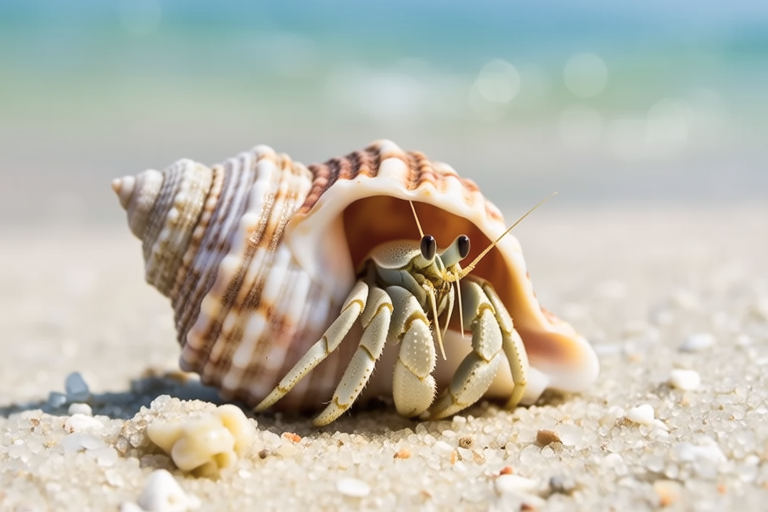
The Secret Life of Hermit Crabs: Unveiling Their Inactive Periods
Hermit crabs are fascinating creatures with a complex and intriguing lifestyle. While many people are familiar with their active periods of scavenging and exploring, their behavior during inactive times remains largely mysterious. Understanding these hidden behaviors and routines is crucial for better care and conservation efforts. This article delves into the shell changing processes, resting habits, nocturnal activities, social behaviors, and survival strategies of hermit crabs during their inactive periods.
Shell Changing Processes
One of the most notable behaviors of hermit crabs is their shell changing process. As hermit crabs grow, they outgrow their current shells and need to find new ones that provide adequate protection and space. This process involves a combination of exploration and opportunism. When a hermit crab is ready to change its shell, it will carefully examine potential new homes, often inspecting multiple shells before making a decision. The selection process can be highly competitive, especially in crowded areas where suitable shells are scarce.
Once a hermit crab finds a desirable shell, it may engage in a brief struggle with the current occupant if the shell is already inhabited. These confrontations are usually short-lived and rarely result in physical harm. After securing the new shell, the hermit crab will carefully move its soft abdomen into the new home, ensuring a snug fit. This process requires precision and timing to avoid exposing the vulnerable part of the body.
Resting Habits
During their inactive periods, hermit crabs adopt various resting habits that reflect their natural instincts and environmental conditions. Resting locations vary depending on species and habitat but generally include crevices, under rocks, or within dense vegetation. These spots offer protection from predators and harsh weather conditions.
Hermit crabs are known to be nocturnal, meaning they are most active during the night. This behavior allows them to avoid daytime heat and predators while taking advantage of cooler temperatures and reduced competition for resources. During the day, they typically remain in their resting spots, conserving energy and minimizing exposure. Some species may also enter a state of dormancy during extreme weather conditions, such as prolonged droughts or heavy rainfall.
Nocturnal Activities
Hermit crabs are primarily nocturnal, which means they are most active during the night. This behavior serves several purposes, including avoiding daytime heat, reducing competition for resources, and minimizing exposure to predators. Nocturnal activity patterns can vary depending on the species and environmental factors, but generally, hermit crabs spend their nights scavenging for food, exploring their surroundings, and interacting with others.
During their nocturnal activities, hermit crabs may engage in various behaviors, such as foraging for food, exploring new territories, and socializing with other crabs. These activities are essential for their survival and well-being, allowing them to locate food sources, establish territories, and form social bonds. Understanding the specific behaviors and needs of hermit crabs during their nocturnal activities is crucial for providing proper care and creating suitable habitats.
Social Behaviors
While hermit crabs are often considered solitary creatures, they do exhibit social behaviors when encountered. These interactions can range from friendly to aggressive, depending on the context and individuals involved. For example, hermit crabs may engage in peaceful coexistence when sharing limited resources, such as food or shelter. However, competition for larger shells can lead to more aggressive encounters, where crabs may fight over possession.
In addition to direct interactions, hermit crabs also communicate through chemical signals. These signals can convey information about sex, readiness to mate, and territorial boundaries. By understanding these communication methods, we can better appreciate the complexity of hermit crab social structures and interactions. Observing and studying these behaviors can provide valuable insights into the social dynamics of hermit crabs and help inform conservation efforts.
Survival Strategies
During their inactive periods, hermit crabs employ various survival strategies to ensure their safety and well-being. One of the most important strategies is seeking refuge in protective environments. Hermit crabs rely on their shells for protection against predators and environmental hazards. They carefully select and maintain their shells, ensuring a snug fit and adequate defense. Additionally, hermit crabs may retreat to deeper water or burrow into the sand during extreme weather conditions, further reducing their risk of injury or death.
Another key survival strategy is resource management. Hermit crabs are adept at finding and utilizing available resources, even in challenging environments. They scavenge for food, recycle organic matter, and adapt to changing conditions. By efficiently managing resources, hermit crabs can survive in diverse habitats and thrive in fluctuating ecological conditions.
The Importance of Understanding Their Secret Life
Understanding the secret life of hermit crabs is vital for their care and conservation. By recognizing their unique behaviors and needs, we can create more suitable habitats and provide better care for these fascinating creatures. This knowledge can also inform conservation efforts, helping to protect hermit crabs and their ecosystems from threats such as habitat destruction, pollution, and climate change.
Furthermore, studying the secret life of hermit crabs can provide valuable insights into broader ecological processes. By examining the interactions between hermit crabs and their environments, we can gain a deeper understanding of ecosystem dynamics and the role of hermit crabs within these systems. This information can be used to develop more effective conservation strategies and promote biodiversity.
