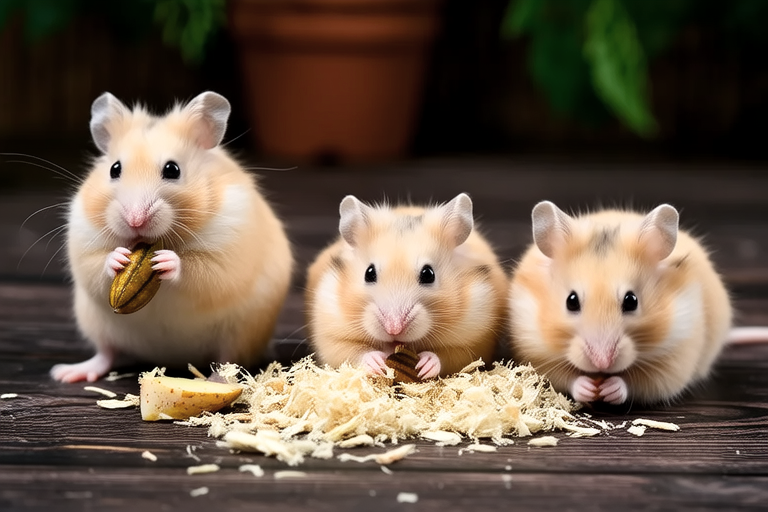
Top 5 Cutest Golden Hamster Habits You Won’t Believe Are Real!
Golden hamsters—those tiny, fluffy bundles of joy with whiskers like feather dusters and cheeks that puff up like tiny balloons—are more than just adorable. Beneath their irresistibly soft fur lies a fascinating world of instinctive behaviors shaped by centuries of evolution. From the way they stash food to their quirky sleep habits, these little creatures perform actions that are not only endearing but also rooted in biology and survival. In this article, we’ll dive into five of the most charming, scientifically supported habits that make golden hamsters such delightful companions. Prepare to be amazed—and maybe even laugh out loud—by the real-life quirks of your pint-sized pet.
The Top 5 Cutest Golden Hamster Habits You Won’t Believe Are Real!
-
They Pocket-Squirt Food Like Tiny Gourmet Chefs
Imagine this: you’re mid-snack, munching on a sunflower seed, when suddenly your golden hamster launches into action. With lightning speed, it grabs the seed, stuffs it into its enormous cheek pouches—each one capable of expanding to hold nearly twice the size of its head—and then vanishes into a corner, only to reappear moments later, already halfway through a secret snack stash. This isn’t a cartoon—it’s a real, documented behavior called “cheek stuffing.”
Biologically, this habit is driven by their natural instinct as burrow-dwelling creatures. In the wild, Syrian hamsters (the species behind the golden variety) forage during short nighttime foraging windows. To survive predators and scarcity, they must gather food quickly and transport it back to their underground dens. Their expandable cheek pouches, lined with stretchy muscle tissue and rich in blood vessels, allow them to carry up to 20% of their body weight in food—a true marvel of evolutionary design.
One owner, Sarah from Portland, shared her favorite moment: “I was giving my hamster a few seeds, and before I could blink, he’d stuffed three in each cheek and sprinted under his hideout. When he came out an hour later, he had a full ‘kitchen’ of seeds buried near his wheel. I swear he looked proud!”
-
They Do the “Hamster Hug” During Sleep
There’s nothing quite like waking up to find your golden hamster curled up into a perfect, fuzzy ball—except when they’re doing what pet owners affectionately call the “hamster hug.” Picture it: your tiny friend has tucked their front paws snugly around their body, tucking their nose into their chest, and lying flat on their side or back, looking like a miniature teddy bear with a permanent smile.
This behavior isn’t just cute—it’s deeply tied to thermoregulation and safety. Hamsters are small mammals with high metabolisms, meaning they lose heat quickly. Curling up conserves body heat, especially important since they sleep for about 12–14 hours a day, often during daylight hours. Lying on their side or back also allows them to keep watch over their surroundings while resting, a vestigial trait from wild ancestors who needed to stay alert to predators.
“My hamster Luna does this every single night,” says James from Austin. “She’ll start off sleeping upright, then slowly roll onto her side, tuck her paws in, and look like she’s hugging herself. It’s so peaceful—I can’t help but smile every time I see it.”
-
They Perform “Wheel Ballets” at Midnight
At 2 a.m., when the house is silent and everyone else is asleep, your golden hamster might be running laps—literally—on their exercise wheel. They don’t just run; they seem to dance. Sometimes they spin in tight circles, other times they pause mid-stride to tilt their head, twitch their nose, or even do a quick hop before resuming. This nightly marathon isn’t random—it’s a biological necessity.
Golden hamsters are crepuscular, meaning they’re most active at dawn and dusk. But in captivity, many shift their activity to nighttime to avoid human noise. Running is essential for their physical health and mental stimulation. Studies show that hamsters deprived of exercise wheels exhibit increased stress levels, reduced cognitive function, and even behavioral issues like excessive grooming or aggression.
Dr. Lena Chen, a small mammal behaviorist, notes: “Hamsters have a natural urge to explore and move. The wheel mimics the long-distance foraging patterns they’d follow in the wild. Watching them run is like seeing a tiny athlete in peak condition—except they’re doing it in socks.”
Maria from Denver recalls: “I used to think my hamster was crazy until I started watching him at night. He runs for 20 minutes straight, then stops, looks around like he’s checking the room, and starts again. I’ve named him ‘Midnight Marathoner.’ He’s basically a furry, four-legged Olympic contender.”
-
They Build “Nest Fortresses” Out of Nothing
Ever walk into your hamster’s cage and find a mountain of shredded paper, fabric scraps, or hay piled into a cozy dome? That’s not a mess—it’s a masterpiece. Your golden hamster has spent hours meticulously crafting a nest, often hidden beneath bedding or inside a cardboard hideout, complete with tunnels and multiple chambers.
This nesting behavior stems from their innate need to create secure, private spaces. In the wild, Syrian hamsters dig complex burrows to protect themselves from predators and harsh weather. Even in captivity, this instinct remains strong. A well-built nest provides warmth, privacy, and a safe place to rest, eat, and—most importantly—raise young if they ever choose to.
Research published in the Journal of Animal Behavior confirms that hamsters prefer nests made from soft, absorbent materials. They’ll spend up to 30 minutes rearranging bedding to fit their ideal structure, sometimes even dragging entire chunks of paper towel across the cage floor.
Tom from Seattle laughs: “I once left a piece of my old flannel shirt in the cage as a ‘gift,’ and within two hours, my hamster had turned it into a fortress. He’d pull it apart, reassemble it, and even sleep inside it. I now call it ‘The Flannel Fortress.’”
-
They “Sneeze” with Dramatic Flair
That sudden, explosive snort? The tiny sneeze that makes your hamster’s whole body jerk? Don’t worry—it’s not a sign of illness. It’s a normal, healthy reflex known as a “nasal clearance burst.” And yes, it’s as theatrical as it sounds.
Golden hamsters have sensitive respiratory systems. Dust, dry bedding, or even airborne particles from their environment can trigger a quick expulsion of air through their nose. This isn’t just a hiccup—it’s a protective mechanism. By forcefully expelling irritants, they prevent mucus buildup and maintain clear airways, crucial for animals with such high metabolic rates.
Interestingly, this sneeze often comes with a comical twist: the hamster may freeze mid-motion, lift a paw dramatically, and give a tiny shake afterward—as if saying, “All clear!”
Lena from Chicago shares: “My hamster Pippin sneezes every time I change his bedding. He’ll stand perfectly still, then let out this tiny ‘achoo!’ and immediately start sniffing the air like a detective. I’ve started recording it—my friends love it.”
What makes golden hamsters truly special isn’t just their cuteness—it’s the blend of instinct, personality, and surprising complexity packed into such a small package. They may be tiny, but their lives are rich with purpose, emotion, and playful routines that mirror the rhythms of nature. Whether they’re building forts, dancing on wheels, or sneezing like tiny comedians, these habits remind us that even the smallest pets can bring immense joy and wonder.
If you’re lucky enough to share your home with a golden hamster, cherish these moments. They’re not just entertaining—they’re evidence of a remarkable creature thriving in your care. And who knows? Maybe one day, you’ll catch your hamster mid-sneeze, mid-run, or mid-nest-building… and realize you’re not just a pet parent—you’re part of their story.
So go ahead, take a moment tonight. Turn off the lights, sit quietly by the cage, and watch your golden hamster do what they do best. In that quiet moment, surrounded by soft breaths and the gentle hum of a spinning wheel, you’ll understand why these tiny, furry wonders are impossible to resist.
After all, the greatest magic isn’t in what they do—but in how they make us feel: seen, smiled at, and reminded of life’s simple, sweet joys.
