The History of the Abyssinian Cat Breed
The Abyssinian cat is one of the most captivating and mysterious feline breeds. With its striking appearance and lively personality, it has captured the hearts of cat lovers worldwide. This breed has a rich history that stretches back thousands of years, with tales of its royal lineage in ancient civilizations. In this article, we will explore the history of the Abyssinian cat breed, tracing its origins from its supposed royal roots to its establishment as a beloved pet in modern homes. We’ll discuss key historical events and figures associated with the breed’s development, describe its distinctive physical characteristics and temperaments, and highlight how the breed has adapted to contemporary living environments.
Origins: The Myth of Royal Roots
One of the most enduring myths about the Abyssinian cat breed is its supposed royal ancestry. According to legend, these cats were revered in ancient Egypt, where they were often depicted in hieroglyphics and mummified along with their human companions. However, while the Abyssinian shares some physical similarities with the Egyptian Mau, there is no concrete evidence linking the two breeds. The true origins of the Abyssinian remain a mystery, but many believe that the breed was developed in the British Isles during the 19th century.
In reality, the first recorded Abyssinian cat appeared at a cat show in Great Britain in 1871. This cat, named Zula, was brought to England by a British soldier who had acquired her during his travels in Abyssinia (now Ethiopia). Despite the name, there is little evidence to suggest that the breed originated in Ethiopia. Instead, it is believed that the breed was developed through selective breeding of various domestic cats, including those with a similar ticked coat pattern found in parts of Asia and Africa.
Key Historical Events and Figures
The development of the Abyssinian cat breed can be traced back to several key historical events and figures. One of the most significant events was the establishment of the National Cat Club in London in 1887. This club played a crucial role in promoting and standardizing cat breeds, including the Abyssinian. The club’s first president, Harrison Weir, was instrumental in organizing the world’s first official cat show at the Crystal Palace in 1871, where Zula made her debut.
Another important figure in the history of the Abyssinian breed was Mrs. Carew-Cox, who bred the first Abyssinian kittens in England in the early 20th century. Her efforts helped to establish the breed as a popular choice among cat fanciers. The Abyssinian also gained recognition from major cat registries, such as the Cat Fanciers’ Association (CFA) in the United States, which began registering the breed in 1937. Today, the Abyssinian is one of the most popular and well-known cat breeds in the world.
Distinctive Physical Characteristics
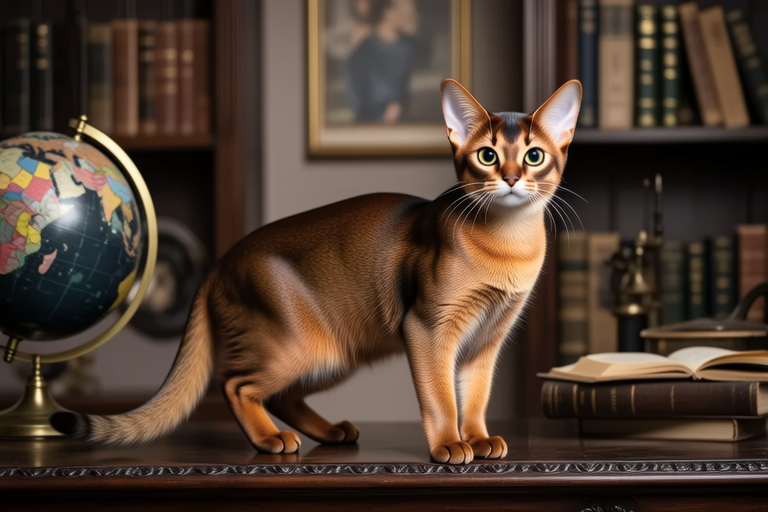
The Abyssinian cat is easily recognizable by its unique coat pattern, known as ticking. Each hair shaft is banded with different colors, typically shades of brown, cinnamon, blue, or fawn. This gives the cat a distinctive appearance that is both elegant and exotic. In addition to its striking coat, the Abyssinian has large, almond-shaped eyes that are usually green or gold, and large ears that are set wide apart on its head.
Abyssinians are medium-sized cats with slender bodies and long legs, giving them a graceful and athletic appearance. They have strong, muscular hindquarters and a long, tapering tail that adds to their overall elegance. The breed’s short, fine coat requires minimal grooming, making it an ideal choice for busy households. However, regular brushing can help to remove loose hairs and prevent matting.
Temperament and Personality
Abyssinians are known for their playful and energetic personalities. These cats are highly intelligent and curious, always ready to explore their surroundings and engage in interactive play. They are often described as “dog-like” in their behavior, as they enjoy following their owners around the house and participating in family activities. Abyssinians are also very social animals and thrive in environments where they receive plenty of attention and affection.
Despite their playful nature, Abyssinians are generally quiet cats that prefer to communicate through subtle body language rather than loud vocalizations. They are gentle and affectionate with their families but may be reserved around strangers. Abyssinians are also known for their loyalty and devotion to their owners, making them excellent companions for individuals and families alike.
Adaptation to Contemporary Living Environments
Abyssinians have adapted well to contemporary living environments, thriving in both urban and suburban settings. Their active and playful nature makes them ideal candidates for households with ample space for exercise and exploration. However, Abyssinians also do well in smaller apartments, provided that they have access to vertical spaces such as shelves, cat trees, and window perches.
These cats are highly adaptable and can adjust to changes in their environment with relative ease. However, it is important to provide them with mental stimulation to prevent boredom and destructive behavior. Interactive toys, puzzle feeders, and training sessions can help keep an Abyssinian engaged and happy. Regular exercise and playtime are essential for maintaining their physical and mental health.
Popularity Among Cat Enthusiasts
The Abyssinian cat breed has grown in popularity over the years, becoming one of the most sought-after breeds among cat enthusiasts. Their unique appearance, combined with their friendly and sociable personalities, has made them a favorite choice for families and individuals looking for a companion cat. In addition to their charm and charisma, Abyssinians are also relatively healthy and long-lived, with an average lifespan of 12 to 15 years.
The Abyssinian’s popularity has been further boosted by its presence in popular culture. The breed has appeared in numerous books, movies, and television shows, including the popular children’s book series “The Secret Garden” and the animated film “The Aristocats.” These appearances have helped to raise awareness of the breed and increase its appeal among cat lovers.
Myths and Misconceptions
While the Abyssinian cat breed has a fascinating history, there are several myths and misconceptions surrounding its origins. As mentioned earlier, the belief that the breed originated in ancient Egypt is one of the most common misconceptions. While the Abyssinian shares some physical similarities with the Egyptian Mau, there is no concrete evidence to support the claim that the two breeds are related.
Another myth is that the Abyssinian is a descendant of the sacred cats of ancient China. While it is true that cats were revered in ancient Chinese culture, there is no evidence to suggest that the Abyssinian breed originated in China. The breed’s true origins remain a mystery, but it is likely that it was developed through selective breeding of various domestic cats with similar coat patterns.
Conclusion
The Abyssinian cat breed has a rich and fascinating history that spans thousands of years. From its supposed royal roots in ancient civilizations to its establishment as a beloved pet in modern homes, the Abyssinian has captivated the hearts of cat lovers worldwide. Despite the many myths and misconceptions surrounding its origins, the breed remains one of the most popular and well-known cat breeds in the world today. With its unique appearance, playful and energetic personality, and adaptability to contemporary living environments, the Abyssinian is sure to continue capturing the hearts of cat enthusiasts for generations to come.
