Unraveling the Mysteries of Hermit Crab Behavior: Insights and Curiosities
Hermit crabs, with their distinctive appearance and intriguing behaviors, have long captivated both amateur enthusiasts and seasoned researchers alike. These fascinating creatures are not only a marvel of nature but also offer profound insights into the complexities of marine life. This article aims to delve into the mysteries surrounding hermit crab behavior, exploring their unique habitat, social interactions, dietary preferences, nocturnal activities, and sensory capabilities.
The Unique Habitat and Shell-Changing Habits of Hermit Crabs
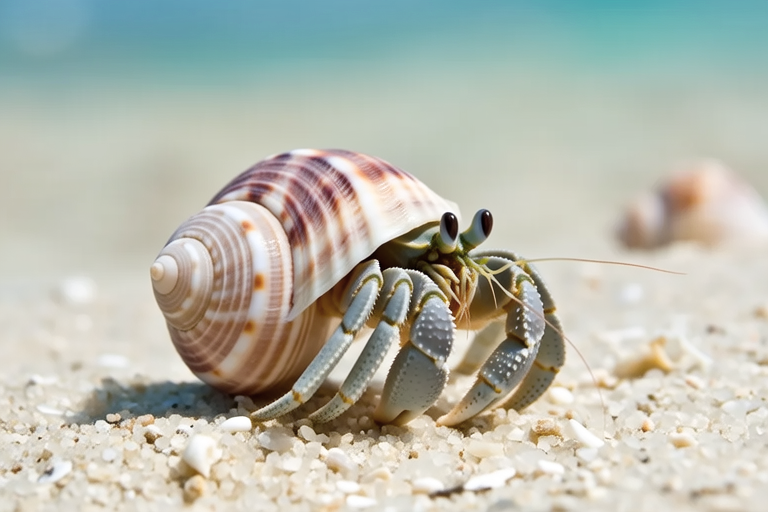
Hermit crabs are predominantly found in coastal regions, from tropical beaches to rocky shores. Unlike other crustaceans, hermit crabs do not have a hard exoskeleton that protects their soft abdomen. Instead, they seek refuge within discarded shells of marine gastropods, such as snails. The selection of a new shell is a critical process for hermit crabs, often involving a meticulous search through various options until finding one that fits perfectly. As hermit crabs grow, they must periodically find larger shells to accommodate their expanding bodies, a task that can be both challenging and competitive.
Social Behaviors and Colony Interactions
Contrary to their solitary appearance, hermit crabs are actually quite social creatures. They live in colonies where cooperation and competition coexist. One of the most remarkable aspects of hermit crab social behavior is their ability to work together when searching for new shells. During these communal events, hermit crabs engage in a coordinated effort to move a particularly desirable shell from one location to another. Additionally, they exhibit a form of communication through chemical signals, which plays a significant role in their interactions within the colony.
Dietary Preferences and Feeding Habits
Hermit crabs are omnivorous, feeding on a variety of organic matter found in their environment. Their diet primarily consists of algae, decaying plant material, and small marine organisms. Interestingly, hermit crabs have adapted to scavenge efficiently, often relying on their keen sense of smell to locate food sources. Their feeding habits are influenced by environmental factors, such as the availability of food and competition from other species.
Nocturnal Activities and Light Sensitivity
Hermit crabs are predominantly nocturnal, becoming more active during the night when temperatures are cooler and predators are less likely to be present. This nocturnal behavior is closely tied to their sensitivity to light. Experiments have shown that hermit crabs react strongly to changes in light intensity, often seeking shelter in darker areas when exposed to bright lights. Understanding these responses can provide valuable insights into their natural habitats and the challenges they face in the wild.
Curiosities and Lesser-Known Facts About Hermit Crab Communication and Sensory Capabilities
Beyond their physical adaptations, hermit crabs possess a range of sensory capabilities that contribute to their survival. They have well-developed antennae that serve as their primary sensory organs, allowing them to detect vibrations and chemical signals in their surroundings. One of the most intriguing aspects of hermit crab communication is their use of pheromones, chemical substances released into the environment to convey information about mating readiness, territory, and even distress. These chemical signals play a crucial role in maintaining social order within hermit crab colonies.
Tips for Observing and Studying Hermit Crabs in Natural Settings
For those interested in observing or studying hermit crabs in their natural habitat, there are several tips to keep in mind. Firstly, it’s important to approach hermit crabs with caution, as sudden movements can startle them and disrupt their behavior. Secondly, consider visiting the beach during low tide, as this is when hermit crabs are most active and easier to observe. Finally, always respect the environment and avoid disturbing the delicate balance of the ecosystem. By following these guidelines, you can enjoy a rewarding experience while contributing to our understanding of these remarkable creatures.
In conclusion, hermit crabs are a testament to the diversity and adaptability of marine life. From their unique habitat and shell-changing habits to their complex social behaviors and sensory capabilities, these creatures continue to fascinate and inspire. Whether you’re a casual observer or a dedicated researcher, there is much to learn and discover about hermit crabs. By delving into the mysteries of their behavior, we can gain a deeper appreciation for the intricate web of life that exists beneath the waves.
