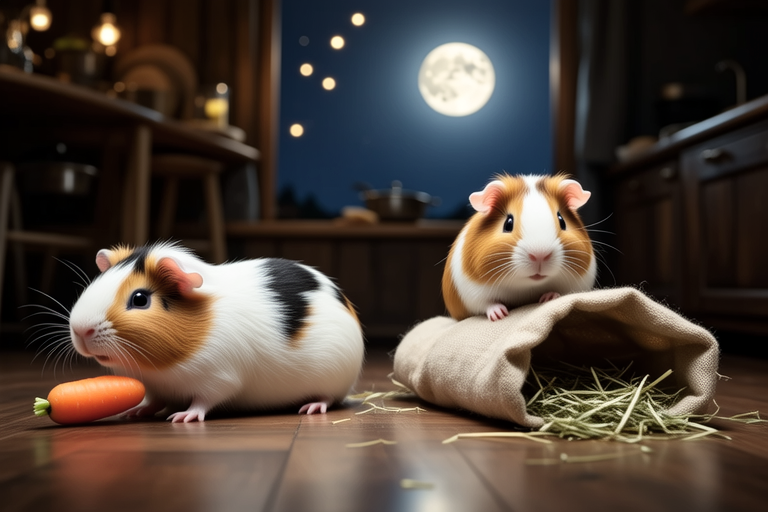
The Secret Life of Guinea Pigs: Uncovering Their Nighttime Activities
Guinea pigs, or cavies as they are scientifically known, are popular pets around the world. These adorable creatures are often thought of as daytime animals, but the truth is more nuanced. While they are active during the day, they also have a rich secret life that unfolds during the night. This article delves into the nocturnal activities of guinea pigs, exploring their behaviors, preferences, and routines. We will also provide scientific insights and practical tips for owners to better understand and care for their pets.
Understanding Guinea Pig’s Nocturnal Tendencies
Guinea pigs are crepuscular, meaning they are most active during twilight hours – dawn and dusk. However, their activity levels can vary depending on the individual and environmental factors. They are capable of being active throughout the day and night, but they tend to have two distinct peaks of activity: one in the early morning and another just before sunset. This behavior is a survival mechanism inherited from their wild ancestors, who were more vulnerable to predators during full daylight.
Scientific studies have shown that guinea pigs have a circadian rhythm that aligns with their crepuscular nature. Their internal clocks are attuned to the changing light conditions, which trigger hormonal changes that affect their activity levels. This means that when the lights dim, guinea pigs become more alert and ready for action. Understanding this natural rhythm can help owners anticipate their pets’ needs and provide appropriate stimulation.
Nocturnal Behaviors and Preferences
During the night, guinea pigs engage in various activities that are crucial for their physical and mental well-being. One of the primary nocturnal behaviors is foraging. In the wild, guinea pigs spend a significant portion of their waking hours searching for food. Even in captivity, they retain this instinct, and it’s common to see them nibbling on hay, vegetables, and other treats throughout the night.
Another key nocturnal activity is social interaction. Guinea pigs are highly social animals and thrive on companionship. If you keep multiple guinea pigs, you might observe them engaging in grooming sessions, playing, and even communicating through vocalizations. These interactions strengthen their bonds and contribute to their overall happiness. Single guinea pigs may show signs of loneliness, so consider getting a companion if your pet seems isolated.
Exploration is also a significant part of guinea pigs’ nighttime routine. They are curious by nature and enjoy investigating their surroundings. Owners can enrich their pets’ environment by providing tunnels, toys, and other objects to explore. This helps prevent boredom and promotes mental stimulation. It’s essential to ensure that any additions to their living space are safe and free from hazards.
Interactions Within the Environment
At night, guinea pigs interact with their environment in several ways. They use their senses, particularly their sense of smell, to navigate and understand their surroundings. This is why many guinea pigs will sniff around their enclosure, checking for familiar scents or new odors. Providing different textures and materials in their habitat can stimulate their olfactory senses and make their nighttime explorations more engaging.
Guinea pigs also rely heavily on their hearing. They have large ears that can rotate independently, allowing them to detect sounds from all directions. This heightened auditory sensitivity helps them stay aware of potential threats or interesting noises in their environment. Owners should be mindful of the sounds in their home, especially at night, as sudden loud noises can startle guinea pigs and cause stress.
In terms of vision, guinea pigs have limited night vision. While they can see in low light conditions, they are not adapted for complete darkness. Providing some ambient lighting, such as a dim nightlight, can help them feel more secure and comfortable during the night. It’s important to avoid bright, harsh lights, as these can disrupt their natural sleep patterns and cause distress.
Unique Habits Observed During Nighttime
One unique habit observed in guinea pigs during the night is their tendency to engage in repetitive behaviors. These behaviors, often referred to as stereotypies, can include circling, head bobbing, or excessive grooming. While these behaviors can be normal, they may also indicate stress or boredom. If you notice your guinea pig exhibiting these behaviors frequently, it’s a good idea to review their environment and enrichment opportunities.
Another fascinating aspect of guinea pigs’ nighttime activities is their vocalization. They communicate through a variety of sounds, including chirping, squeaking, and purring. These vocalizations serve different purposes, such as expressing excitement, signaling danger, or seeking attention. Paying attention to your guinea pig’s vocalizations can give you valuable insights into their emotional state and needs.
Some guinea pigs may also display nesting behaviors at night. They may gather hay, bedding, or other soft materials to create a cozy nest. This is a natural instinct and can be encouraged by providing appropriate nesting materials. A comfortable nest can improve your guinea pig’s sleep quality and overall well-being.
Tips for Owners
To better understand and care for your guinea pig based on their nighttime activities, here are some practical tips:
- Provide ample foraging opportunities: Scatter hay and pellets around their enclosure to encourage natural foraging behaviors. You can also offer small portions of fresh vegetables and herbs to add variety to their diet.
- Encourage social interaction: If you have multiple guinea pigs, ensure they have enough space and opportunities to interact. For single guinea pigs, consider spending time with them at night to provide companionship.
- Create a stimulating environment: Add tunnels, toys, and other enrichment items to keep your guinea pig mentally engaged. Rotate these items periodically to maintain interest.
- Maintain a consistent routine: Establish a regular schedule for feeding, cleaning, and handling your guinea pig. Consistency helps them feel secure and supports their natural circadian rhythm.
- Monitor health and behavior: Keep an eye on your guinea pig’s overall health and behavior. Any significant changes could indicate underlying issues that need attention.
Conclusion
The secret life of guinea pigs during the night is a fascinating topic that reveals much about their natural behaviors and needs. By understanding their nocturnal tendencies, preferences, and interactions within their environment, owners can provide better care and enhance their pets’ quality of life. With the right knowledge and approach, you can ensure that your guinea pig enjoys a happy and fulfilling nighttime experience.
