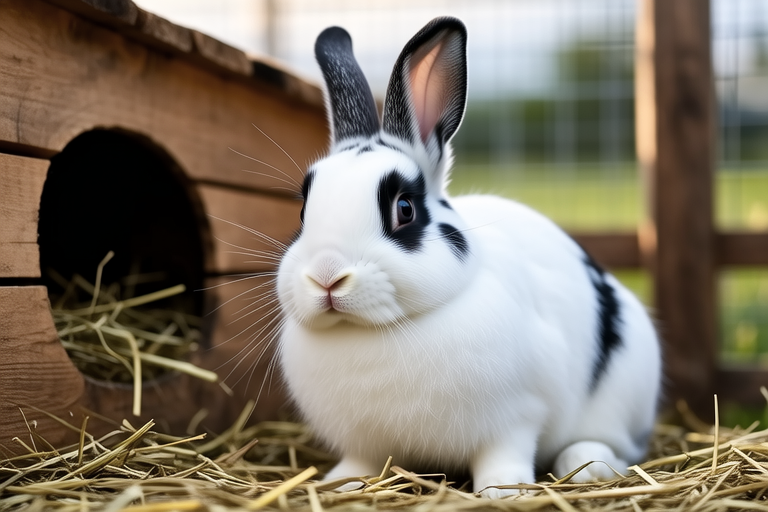
From Farm to Home: How the Elegant Hotot Rabbit Became a Popular Pet
The Hotot rabbit, with its striking appearance and gentle demeanor, has risen from its humble beginnings as a farm animal to become a cherished household pet. This article delves into the historical background of the Hotot breed, its unique physical characteristics, the journey from farm to home, and the factors that have contributed to its growing popularity among pet owners.
Historical Background: Origins and Initial Purpose
The Hotot rabbit breed originated in France during the early 20th century. It was developed by Eugène Énaut, a French breeder who sought to create a pure white rabbit with black rings around its eyes, resembling mascara. The name “Hotot” comes from the village of Hotot-en-Auge, where Énaut resided and conducted his breeding experiments. Initially, these rabbits were bred primarily for their meat and fur. Their elegant appearance made them a valuable addition to French farms, but it wasn’t long before their charm began to extend beyond agricultural purposes.
Physical Characteristics: What Makes the Hotot Unique?
The Hotot rabbit is renowned for its distinctive physical features. These rabbits are medium-sized, typically weighing between 3.5 and 4.5 kg (7.7 to 9.9 lbs). Their most striking characteristic is the black eye ring that encircles their otherwise pure white fur, giving them an almost mystical appearance. This unique marking is the result of careful selective breeding over many generations. The contrast between the white fur and the black eye ring creates a striking visual effect, making the Hotot one of the most visually appealing rabbit breeds.
Aside from their eye-catching appearance, Hotots are also known for their well-proportioned bodies. They have short, dense fur that requires minimal grooming, which is a significant advantage for pet owners who may not have extensive experience with rabbits. Their compact size and gentle nature make them ideal companions for families and individuals alike. Additionally, they are generally quiet and calm, making them suitable for apartment living.
The Transition from Farm Animals to Household Pets
The transformation of the Hotot rabbit from a farm animal to a household pet has been gradual but significant. As public perception shifted towards viewing animals more as companions rather than just resources, the Hotot’s appeal as a pet grew. Breeders began to focus more on temperament and health, ensuring that these rabbits could thrive in a domestic setting.
Breeding practices evolved to emphasize not only the aesthetic qualities of the Hotot but also its adaptability and ease of care. Today, Hotot rabbits are bred specifically for their suitability as pets, with an emphasis on producing rabbits that are friendly, docile, and easy to handle. This shift in breeding goals has played a crucial role in the Hotot’s increasing popularity as a domestic pet.
Factors Contributing to Rising Popularity
Several key factors have contributed to the Hotot rabbit’s growing popularity as a domestic pet. Firstly, their unique appearance sets them apart from other rabbit breeds, making them highly desirable for those looking for a distinctive pet. Secondly, their calm and gentle nature makes them excellent companions for families with children. Hotots are known for being patient and tolerant, which can be invaluable when interacting with young children.
Additionally, the Hotot’s relatively low-maintenance care requirements have made them an attractive option for busy pet owners. Their short, dense fur means that grooming is less frequent, and they are generally healthy, requiring fewer veterinary visits than some other rabbit breeds. Finally, the rise of social media and online communities has helped to spread awareness about the Hotot rabbit, showcasing their beauty and charm to a wider audience.
Tips for Potential Owners
If you’re considering adding a Hotot rabbit to your family, there are several important factors to keep in mind. First and foremost, ensure that you provide your rabbit with a spacious and comfortable living environment. A large cage or enclosure with plenty of room to move around is essential for their physical and mental well-being. Additionally, rabbits need regular exercise, so consider allowing your Hotot some supervised time outside of its enclosure each day.
Diet is another critical aspect of rabbit care. Hotots, like all rabbits, require a diet rich in hay, fresh vegetables, and a limited amount of pellets. Avoid feeding them excessive amounts of sugary treats, as this can lead to health problems. Regular dental check-ups are also important, as rabbits’ teeth grow continuously throughout their lives. Lastly, remember that rabbits are social animals and thrive on interaction with their human companions. Spend time playing and bonding with your Hotot to strengthen your relationship and ensure its happiness.
Conclusion
The Hotot rabbit has come a long way since its origins as a farm animal in France. Its striking appearance, gentle nature, and low-maintenance care requirements have made it a popular choice for pet owners around the world. As we continue to embrace animals as companions rather than just resources, the Hotot rabbit will undoubtedly remain a beloved member of many households. Whether you’re a seasoned rabbit owner or considering adopting your first pet, the Hotot offers a unique and rewarding experience for all involved.
